
Sherri Thumma ’20 and Nadine Kridli ’20
Chad Carr, the grandson of a famous University of Michigan football coach, Lloyd Carr, died of a brain tumor at the age of 5. With a bad fall and a suspected concussion, doctors ran a CT scan to discover an inoperable brain tumor called diffuse intrinsic pontine glioma (DIPG). As Carr fought hard, his family virtually made DIPG known internationally: #ChadTough. Through this spread of awareness, the University of Michigan Chad Carr Pediatric Brain Tumor Center was able to be established1,2. Another case, Senator John McCain, a war hero, a U.S. senator, and a 2008 presidential candidate, died of a brain tumor called glioblastoma (GBM) at the age of 81. A CT scan helped to connect the senator’s inexplicable symptoms of fatigue, brain fog, and double vision. After more than a year of fighting the cancer, he made the decision to stop treatment in 2017. A day later he passed away3. There is a great chance that you may have heard of either of these people and their tribulations with their horrific diseases. And, despite the fact that DIPGs and GBMs are rare, they both share one commonality: they possess the ability to rapidly progress and debilitate the patient, even in the face of treatment4. So, what exactly gives these conditions their notorious reputations and what does the future of medicine hold in stopping these diseases in their tracks?

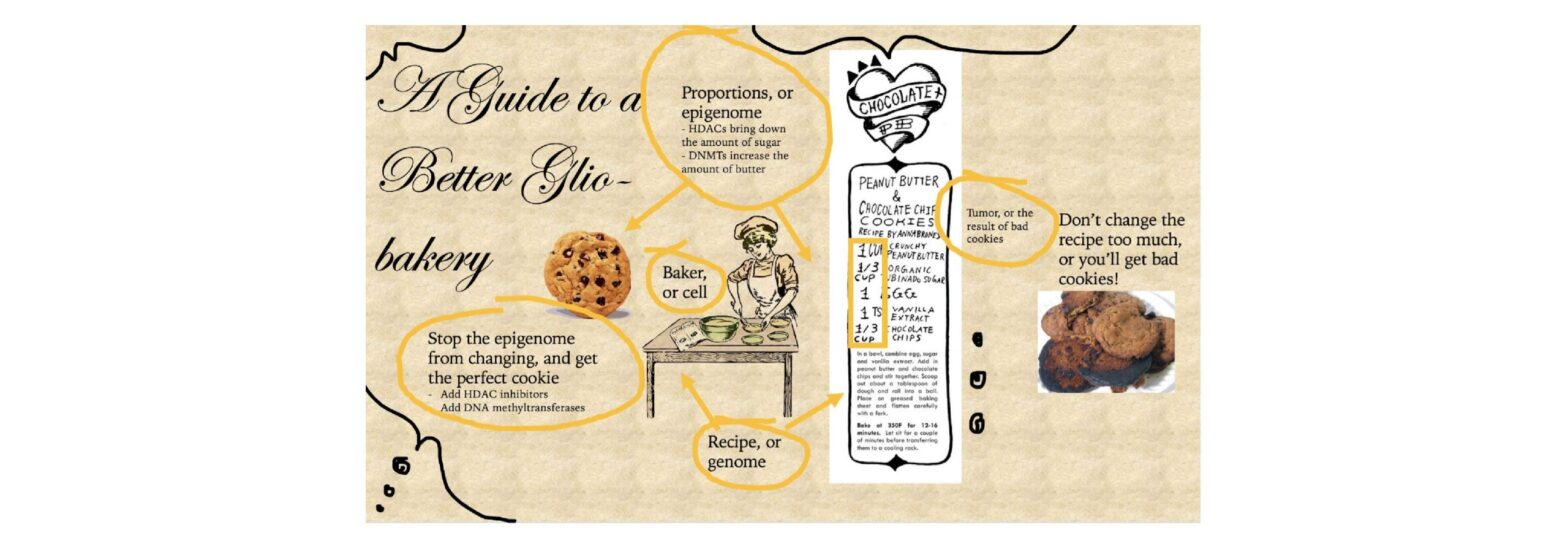
DIPG and GBM are both forms of brain cancer – something we all know to be a scary diagnosis to receive. With conventional treatments, such as chemotherapy and radiation, the prognosis is usually approximately 15 to 16 months. Moreover, GBM patients who live 5 years or more have a survival rate of 10% and those kinds of cases are rare. So, with prognoses with this type of cancer being as bad as it sounds, and with 80,000 people being diagnosed annually with GBM, what is a similarity among all of these patients? Their genome. See, if you think of the genome as a recipe for chocolate chip cookies, it has some minor changes to it depending on the person who makes the chocolate chip cookies, but across the board, overall, it’s pretty much the same. However, people who eat them can tell you that a small change to the recipe can make a world of a difference in regard to taste.
What Makes Chocolate Chip Cookies Different from Other Types of Cookies?
As aforementioned, glioblastoma (GBM) is a type of cancer that can be thought of as a chocolate chip cookie. So far, we have discussed this specific cancerous tumor type, but what makes this cancer different from other types of cancers, or other types of cookies?
GBM is localized in the brain, or the control center of the human body. You may be familiar with the idea that the brain is made up of a series of electrical networks, similar to wires. There is a group of cells that specializes in maintenance of these networks called glial cells which are present in all parts of the brain and allow the brain to carry out its typical functions. A GBM is cancer specifically of these glial cells, which means that this type of cancer can spread throughout the brain rapidly.
GBMs can begin to develop practically anywhere on the brain. As mentioned in the introduction, Chad Carr had a specific type of brain cancer called a DIPG. This starts out in one region of the brain, but as it progresses to stage four, it acts like a GBM. GBMs are very aggressive, and they can be characterized by a spectrum of symptoms depending on the part of the brain the growth affects. These symptoms can range from mild to very severe, and with the course of the disease progressing over a relatively short period of time, they can manifest quickly. For instance, some of the milder symptoms that result from the tumor are headaches, blurred vision, and nausea. And, some of the more severe symptoms may cause the patient to behave abnormally, as GBMs affect the control center of the body. For some people, this can result in personality changes, speech difficulties, and seizures5.
As you can imagine, a GBM diagnosis can be devastating. Fortunately, researchers have been working to fix this cookie recipe and get GBM patients feeling good again! Read on to understand how, and what the future holds.
Changes to the Recipe
Adding a little extra sugar or butter to the cookie recipe can make a huge difference in how the cookies taste. In a similar way, a small change in the genome of a patient can have a large effect on how they experience GBM. But, wait, what is a genome? Essentially, it is a recipe that consists of all of our DNA. And, that DNA is a ‘code’ that helps our body know what needs to be made. There are parts of our genome that make us different, like hair color and eye color, but for the most part, our genomes are the same and encode proteins that are essential to our bodies’ functioning. The genome also has an additional layer to it than just the DNA called the epigenome. This contributes to the taste of the recipe and you can think of this as the proportion of ingredients used to make the cookies.
Should I add more Sugar?
The aforementioned ingredient proportions are comparable, for instance, to one aspect of the epigenome called acetyl groups. When acetyl groups are added to a part of the genome, or recipe, the body knows to make more of a specific protein or add more of that ingredient to the recipe.

Furthermore, these acetyl groups can be removed from the recipe with something called an HDAC, or histone deacetylase. A deacetylase, as you may have guessed, is something that removes an acetyl group. By removing the acetyl groups, the amount of protein being made decreases. In GBM patients, HDAC levels are very high, which may lead to some problems in the cells. When too many regions of the epigenome are being deacetylated by HDACs, the cell could be left making only a small amount of the necessary proteins that need to be made. Or, in other words, the chocolate chip cookies would taste bitter due to a lack of sugar being added.
In addition, when we have too many acetyl groups removed (i.e. too many HDACs present), chemotherapy and radiation have trouble targeting the genome, making them less effective. When acetyl groups are removed from the epigenome, the genome, or genetic code, curls up really tight and becomes difficult to target. These therapies work to attack the genome in its uncurled, open state, but when it is coiled tightly, it is harder to attack the cancerous cells, allowing them to survive and grow. This means that chemotherapy and radiation usually look for the recipe sheet to shred once the cookies have gone bad, but now that the recipe is crumpled, they have trouble being able to do this. And, this leads to problems in the efficacy of such treatments in GBM patients, such as chemotherapy and radiation, which have trouble actually targeting the genome6.
Potential Solutions to the Sugar Problem
In order to increase the efficacy of these standard therapeutic interventions, research is investigating ways to target these HDACs, leaving the genome open to be targeted in cancerous cells. This can be done with histone deacetylase inhibitors (HDACis). By inhibiting the HDACs with HDACis, the genome will remain open because there will be more acetyl groups in the epigenome. This allows the chemotherapy and radiation to kill the cancer cells and, ultimately, shrink the tumors6. In other words, the sheet with the bad recipe will be readily available for the shredder, and the bad cookies will no longer be made.
In a 2019 study, two HDACi forms were discovered to have the potential to be devised as treatments for GBM patients. There were several types of HDACis tested, but only two forms were able to specifically be active in the cancerous glial cells, leaving the healthy glial cells unharmed in the brain7. As mentioned earlier, glial cells help to ensure the functioning of networks in the brain, so it is important that the healthy glial cells survive when treating the tumor of a GBM patient.
Maybe we need a Little more Butter…
One way we can decrease the amount of a cancer-promoting protein is by adding methyl groups to the epigenome. Methyl groups serve the opposite function of acetyl groups: they decrease the amount of protein being made.
One ingredient, or protein, that is crucial in determining the response of brain cancer cells to treatment is known as MGMT. This protein is used to fix the genome when it is damaged, something that occurs more often than you would expect. Exposure to the sun or getting an X-ray can harm the genome. In a healthy patient, it makes sense that we would want a lot of this protein, as it would help to minimize the damage to their genome. However, if the MGMT protein is present in cancer cells, then the cells are able to repair its damage from the chemotherapy and radiation. The purpose of these therapeutic interventions is to target the genome of cancerous cells so that they die, but when MGMT is present at high levels, the cells cannot die, and the tumors survive to grow and proliferate6.

Moreover, not all GBM patients are alike, as different patients will have different amounts of MGMT in their cells. Those with MGMT will respond better to treatments, as suggested by the previous paragraph, and have an average survival time of 21.7 months6. And, those with more MGMT, or less methyl groups, have an average survival time of 12.7 months8. This goes to show that there are differences even among GBM patients that can lead to varying prognoses. With a few more methyl groups, or more butter we may be able to get our cookie recipe back in shape.
Potential Solution to the Butter Problem
To fix a cookie without enough butter, we can add more. Similarly, to help patients with less methyl groups in the region of their genome encoding the MGMT protein to be more targetable for treatments, we can add more methyl groups. This can be done with something called a DNA methyltransferase (DNMT), which adds methyl groups in the epigenome. In a 2018 study, it was suggested that the combination of a DNMT with chemotherapy may yield better outcomes for GBM patients than just chemotherapy alone8. This means that we are adding more butter to our recipe to get another step closer to the perfect chewy cookie.
A Fix to Yield the ‘Perfect’ Recipe?
The use of treatments such as HDACis and DNMTs alongside traditional treatments like chemotherapy and radiation reveal promising results for GBM patients. This is because genomes and epigenomes of GBM patients are not all the same. One study stated that a database called the Cancer Genome Atlas has been looking at the varying numbers of methyl groups and acetyl groups in GBM patients to look for subtypes of glioblastoma patients6. In doing so, we can address each patient individually to ensure that the best possible therapeutic interventions are being implemented for them, given the state of their genome. This is a vastly increasing field of medicine that you may have heard of, known as precision medicine. In other words, bakers will tinker with each recipe until the perfect cookie has been baked!
Links for Further Reading & Videos
Video about how cancer immunotherapy works:
Video about Getting My Life Back After Glioblastoma – Carol’s Immunotherapy Story:
Immunotherapy in Treatment of Brain Cancer and Autoimmune Disease:
References
- Vloet, Katie. “ChadTough: One Boy’s Legacy of Hope.” ChadTough: One Boy’s Legacy of Hope | Medicine at Michigan, 2017, www.medicineatmichigan.org/development-news/2017/fall/chadtough-one-boy%E2%80%99s-legacy-hope.
- “Paving the Way to Cures.” Chad Carr Pediatric Brain Tumor Center, 14 Feb. 2020, medicine.umich.edu/dept/pediatric-brain-tumor/paving-way-cures.
- LeBlanc, Paul. “John McCain’s Cancer: What Is Glioblastoma?” CNN Health, Cable News Network, 26 Aug. 2018, 8:50 PM, www.cnn.com/2017/07/20/health/what-is-glioblastoma-john-mccain-brain-tumor/index.html.
- “Gliomas.” Johns Hopkins Medicine, www.hopkinsmedicine.org/health/conditions-and-diseases/gliomas.
- “Glioma.” Mayo Clinic, Mayo Foundation for Medical Education and Research, 9 Aug. 2019, www.mayoclinic.org/diseases-conditions/glioblastoma/cdc-20350148.
- Lee, Dong Hoon et al. “Advances in epigenetic glioblastoma therapy.” Oncotarget vol. 8,11 (2017): 18577-18589. doi:10.18632/oncotarget.14612
- Was, H., Krol, S.K., Rotili, D. et al. Histone deacetylase inhibitors exert anti-tumor effects on human adherent and stem-like glioma cells. Clin Epigenet 11, 11 (2019). https://doi.org/10.1186/s13148-018-0598-5
- Romani, Massimo et al. “Epigenetic Targeting of Glioblastoma.” Frontiers in oncology vol. 8 448. 16 Oct. 2018, doi:10.3389/fonc.2018.00448
- “Glioblastoma.” MD Anderson Cancer Center, www.mdanderson.org/cancer-types/glioblastoma.html.
- Han, Seunggu. “What Is Glioblastoma?” Healthline, 17 May 2017, www.healthline.com/health/brain-tumor/glioblastoma.
- Dunn, Jennifer, and Sudha Rao. “Epigenetics and Immunotherapy: The Current State of Play.” Molecular Immunology, vol. 87, 26 Dec. 2016, pp. 227–239., doi:10.1016/j.molimm.2017.04.012.
- Etcheverry, A., Aubry, M., de Tayrac, M. et al. DNA methylation in glioblastoma: impact on gene expression and clinical outcome. BMC Genomics 11, 701 (2010). https://doi.org/10.1186/1471-2164-11-701
Image Sources
BOGObiology. 11 October, 2017. Epigenetics: Nature vs. Nurture. [Video File]. https://youtu.be/Q8BMP6HDIco
Butter – Eats&Arts Food Photography, www.eats-arts.com/index.php/butter.html.
Payam, Izadpanahi, et al. “Glioblastoma and the Significance of MGMT Gene Methylation.” Semantic Scholar, 2014, www.semanticscholar.org/paper/Glioblastoma-and-the-significance-of-MGMT-gene-Payam-Kazem/eb20bdc5c55ce00cac9d8b3b64e67c4a6b5119fb.
Rabideau, Camryn. “Ever Wonder How Sugar Is Made? Here’s Your Answer.” Taste of Home, 27 Nov. 2019, www.tasteofhome.com/article/how-is-sugar-made/.
Sunsky, www.sunsky-online.com/.
Urry, et al. “Chapter 15 – Regulation of Gene Expression.” Campbell Biology in Focus, edited by Cain, Pearson Education, Inc., 2014.
Zhou, Alvin. “The Best Chewy Chocolate Chip Cookies Recipe.” Tasty.co, Tasty, 27 July 2017, tasty.co/recipe/the-best-chewy-chocolate-chip-cookies.
Podcast Media Sources
“ESPN ChadTough.” YouTube, The ChadTough Foundation, 14 Mar. 2019, www.youtube.com/watch?v=qqzR6lPgZEA.
“Glioblastoma: Working to Turn the Tide on This Deadly Brain Cancer.” YouTube, Michigan Medicine, 21 Jan. 2020, www.youtube.com/watch?v=j9F3QZn9pno.
“Sen. John McCain Diagnosis: What Is Glioblastoma?” YouTube, Fox Business, 20 July 2017, www.youtube.com/watch?v=smMJ-74ZYZ0&t=11s.