

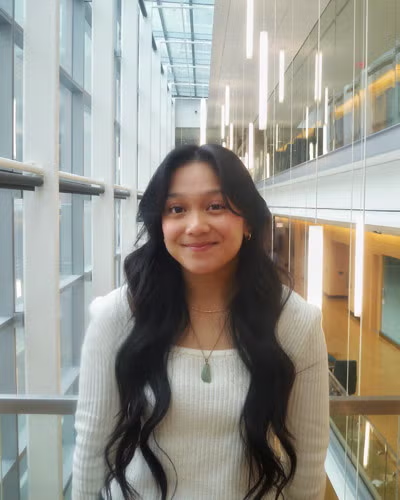
Sarah Chow
Pronouns: she/her
Research Mentor(s): Zhong Wang
Research Mentor School/College/Department: Cardiac Surgery / Medicine
Program:
Authors: Sarah Chow, Ziad Sabry, Zhong Wang
Session: Session 7: 4:40 pm – 5:30 pm
Poster: 78
Abstract
After suffering a heart attack, functional heart cells such as cardiomyocytes and endothelial cells undergo fibrosis. The result is the formation of non-functional scar tissue. Previously, fibroblasts were reprogrammed into induced pluripotent stem cells, and then converted to endothelial cells, however this is a long and difficult process with a low success rate. However, currently, a way to reprogram these cells into healthy, functional endothelial cells is being studied and tested. Mouse fibroblasts are sought to be directly reprogrammed, using the transcription factor FLI1 paired with the kinase MEK2. The cells have been exposed to both the transcription factor FLI1 and the kinase MEK2 through infection, where these components were introduced to the genome of the cell. While a multitude of kinases have been and continue to be tested via qPCR, MEK2 and FLI1 have become the areas of interest, as its addition most efficiently converts fibroblasts to endothelial cells.

