Soup

What makes good soup? First, you need a flavorful stock, setting a foundation for the soup to prevent it from becoming tasteless and bland. Second is the ingredients. Rather than tossing ingredients willy nilly, bringing a variety of meats and vegetables that go well together will cook up a nutritionally balanced and tasty soup. Next, although overlooked, is the dinnerware. You can’t drink soup if there isn’t any bowl to put the soup in or a spoon to drink it. And to top it off, both figuratively and literally: garnish. Although not needed, using it can enhance the flavor of the soup or just make it look nice and pretty.
Now that we know how to make good soup, we just need to make it. But for many people across the world, that isn’t a privilege they own. Whether due to the pandemic, natural disasters like the recent Hurricane Ian, or personal financial crises, a vast number of people around the world have found themselves unable to sustain them and possibly their family, let alone cook a warm meal for themselves. One of the solutions to get everyone who isn’t in a home into one are street papers, a business where the homeless can sell newspaper issues to people on the street to gain a flow of income.
In order for a street paper to find meaningful success, there can’t just be a brick-and-mortar building to act as a home base, but a website to support the foundation is necessary to spread awareness to a much larger audience and garner more support to your cause. And that brings up the question: What makes a good website? First, you’ll need a structure, allowing the user to navigate and absorb the information with ease. Second is the content. Not only talking about homeless people but expanding the content you bring to other social problems or community events will create a relatable experience for the user. The next thing you’ll need is accessibility, giving users who want to help or are in need of help to have the resources required to do so. Finally, the garnish. Like in soup, not necessary, but additions like merch or podcasts can help attract more users and convince them to help.
The Street Papers
StreetSheet is a street paper from California, which gives out magazines published by the Coalition on Homelessness to vendors for free to sell for $2. Their goals are to fight for housing justice for those facing poverty in San Francisco.

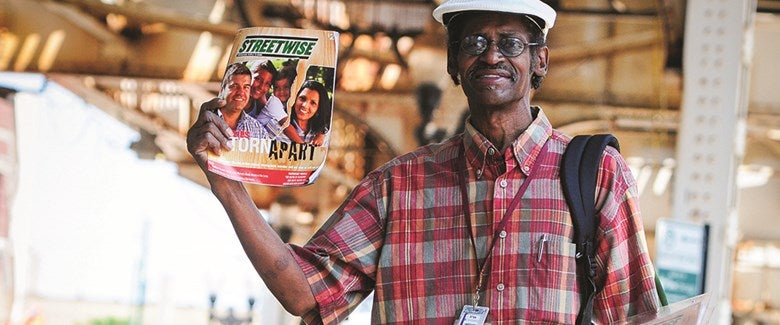
StreetWise from Chicago has similar goals, giving vendors street papers for $1.15 for them to sell for $3 in hopes to give the homeless a flow of income, but lean back on the notion that it is still their responsibility to take the opportunity given to them and escape poverty, giving “a hand up, not a handout.”
The last street paper is StreetZine, founded by the Stewpot in Dallas, Texas. Like the previous two, StreetZine gives vendors magazines for 25¢ to sell them for $1 in order to find a source of money, but unlike StreetSheet and StreetWise, they provide a huge number of other programs like rehousing and meal programs, to not only give a start to those in need but help them every step of the way.
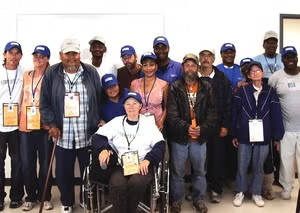
Each of these cities where the street papers reside are massive cities, yet the number of homeless people vary drastically. Dallas recorded around 4,000 homeless people in 2022, San Francisco doubling that amount with nearly 8,000 people with home instability, and the Chicago Coalition for the Homeless reports a staggering 65,611 people without a place they can call home. So by looking at the differing qualities that each website brings to support their respective street paper, we might be able to find what works and what doesn’t to best optimize the growth of street papers to end homelessness.
Structure
Building a website with solid structure requires two key factors: how easily you can maneuver through the site, and how well you can serve the user information without overwhelming them. All three street papers immediately let you know who they are and what they do, although every site except StreetZine makes use of a featured image at the top of the page. Without it, the page feels empty and bland, unable to grab the reader’s attention to what the street paper’s intentions are. But by filling space in a clean way using powerful imagery and eye-popping colors get the reader to focus on the message each street paper is trying to convey. StreetSheet does it exceptionally well, using an image of protests surrounded by bold blacks and greens with a softer grey background makes the reader instantly look at the banner and see that StreetSheet is an alliance to fight against housing injustices.

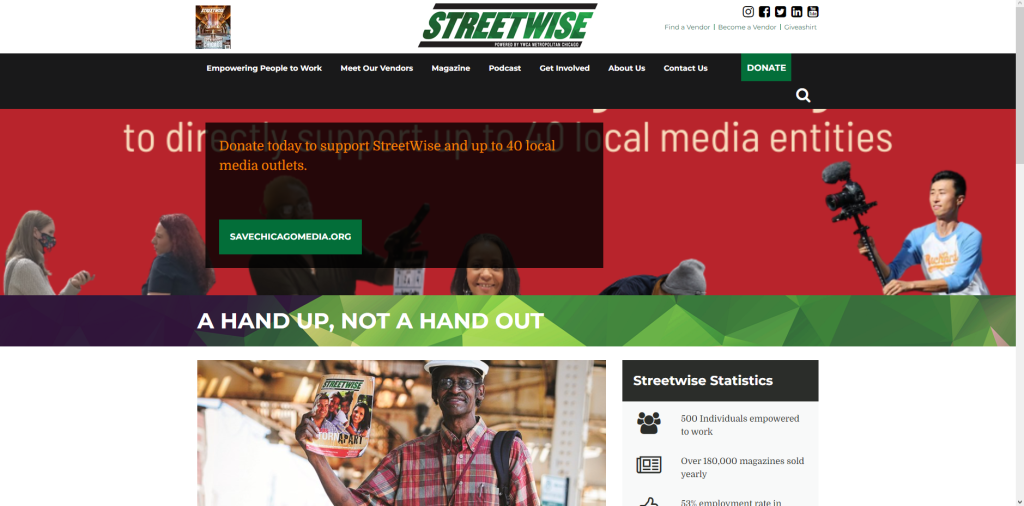
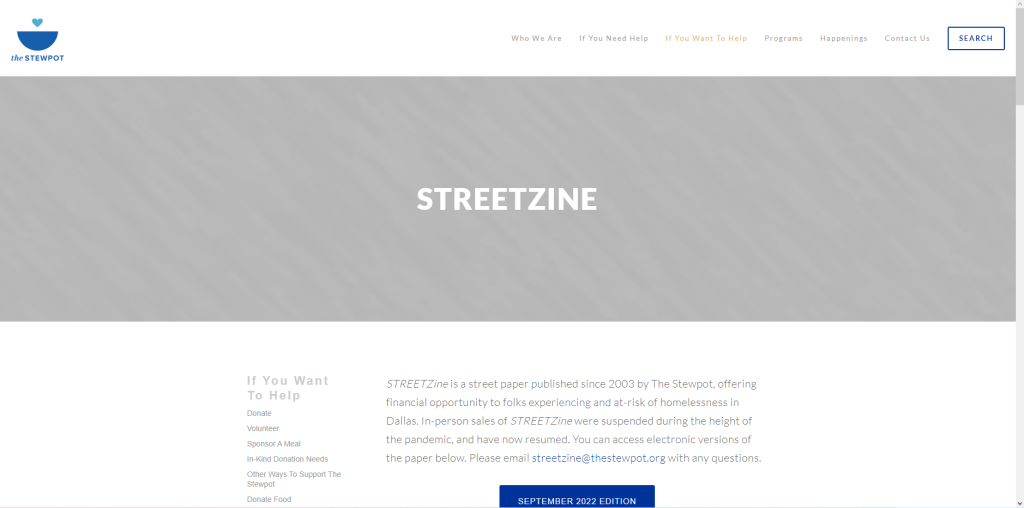
StreetSheet and StreetWise also utilize simple formats where they feature articles, issues, and other pages distinct from each other, making it easy to identify what is what and traverse through them. StreetZine’s homepage however, is cluttered, placing issues between their information, not giving spotlight to their online articles and videos, and placing the “If You Want to Help” dropdown a second time on the homepage, adding redundant information without adding anything new. By keeping the rest of their content within the “Happenings” tab, StreetZine restricts that information to only those who actively explore each and every page of the site, but by shifting that content right onto the homepage front and center, they can engage the user in a treasure trove of stories and events to build a connection between the user and the community StreetZine is attempting to help.
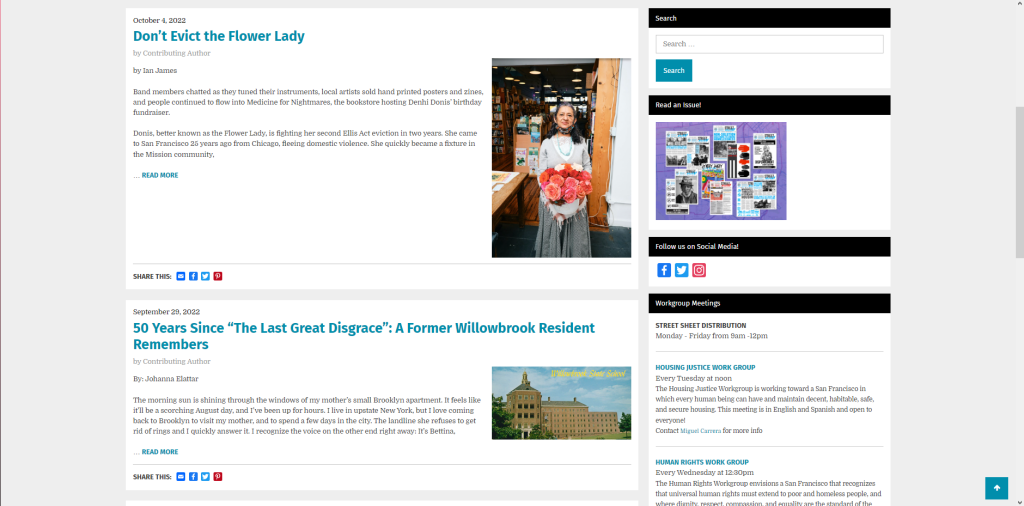
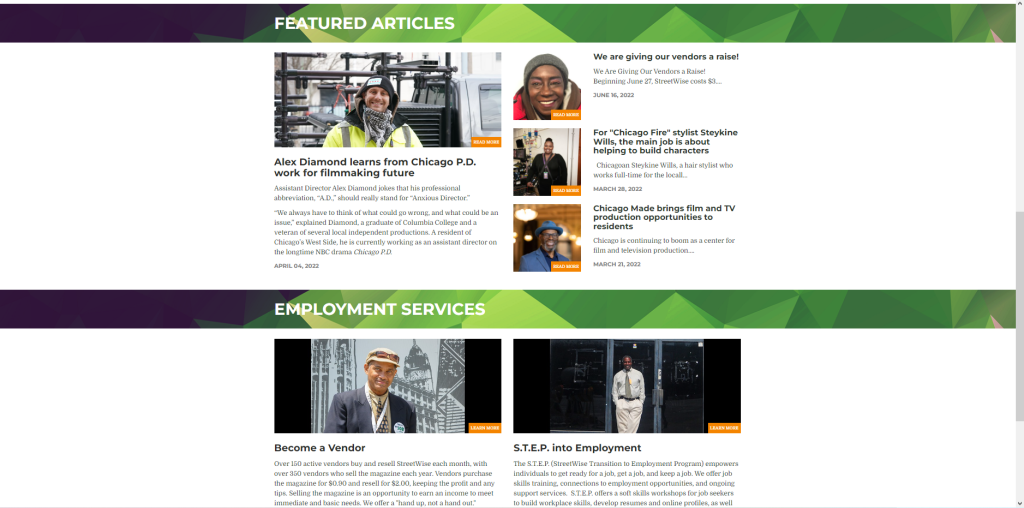
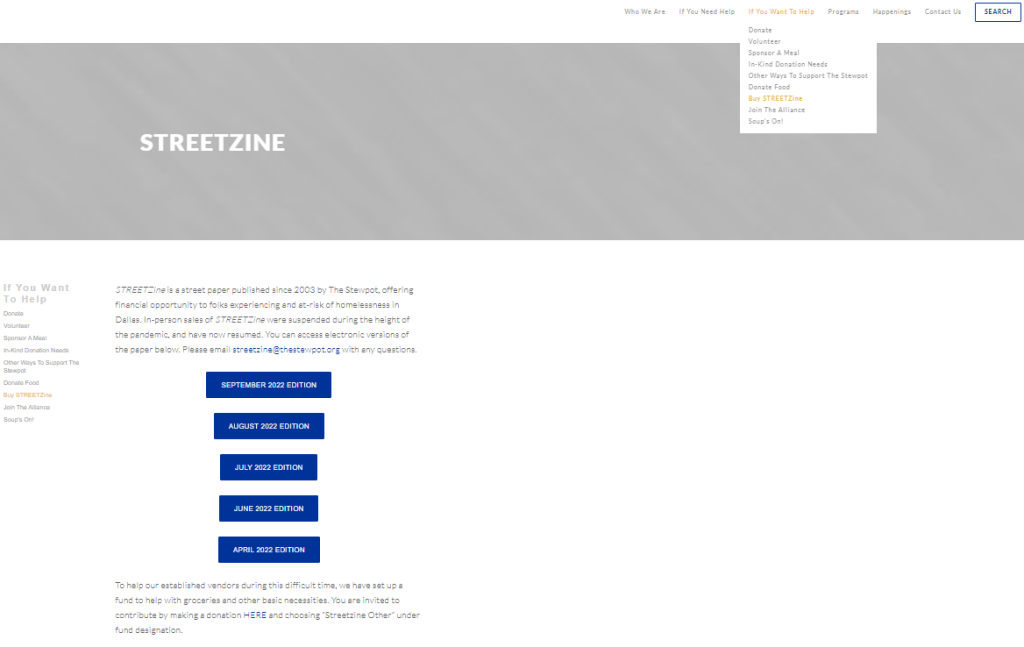
Although StreetSheet and StreetWise are superior to StreetZine in terms of website structure, they are still far from perfect. Although not implemented as shoddily as StreetZine, StreetWise falls in the trap of redundancy, having both the magazine tab and the magazine icon in the top left take the user to the same page where the articles are contained. Additionally, their tabs do not indicate whether or not it will expand into a drop down, making it confusing when traversing through pages. StreetSheet’s issue page has no images to accompany their download links for their more recent issues, taking up large amounts of space without any substance or eye-candy to fill the void.
Overall, StreetSheet has the best structure of the three, making use of powerful images with striking colors to take hold of the readers eyes and refuse to let them go. StreetWise is a very close second, following the same path StreetSheet, but missing the explosive images StreetSheet contains, and StreetZine falls behind, with a cluttered homepage that fails to seem interesting at first glance.
Content
Just because a website’s structure is acceptable does not mean that the rest of a street paper’s trait can lag behind. This is especially true for the content within the pages of each street paper. Like soup, even if you hold the best soup stock in the world, it means nothing if you cook it with spoiled meats and vegetables. To have an exceptional substance means to bring a variety of content that delve into varying topics while being rooted with your original issue to get the reader to know the communities in city. Not just the people, but the stories behind the people, the groups of people, and the causes they work for.
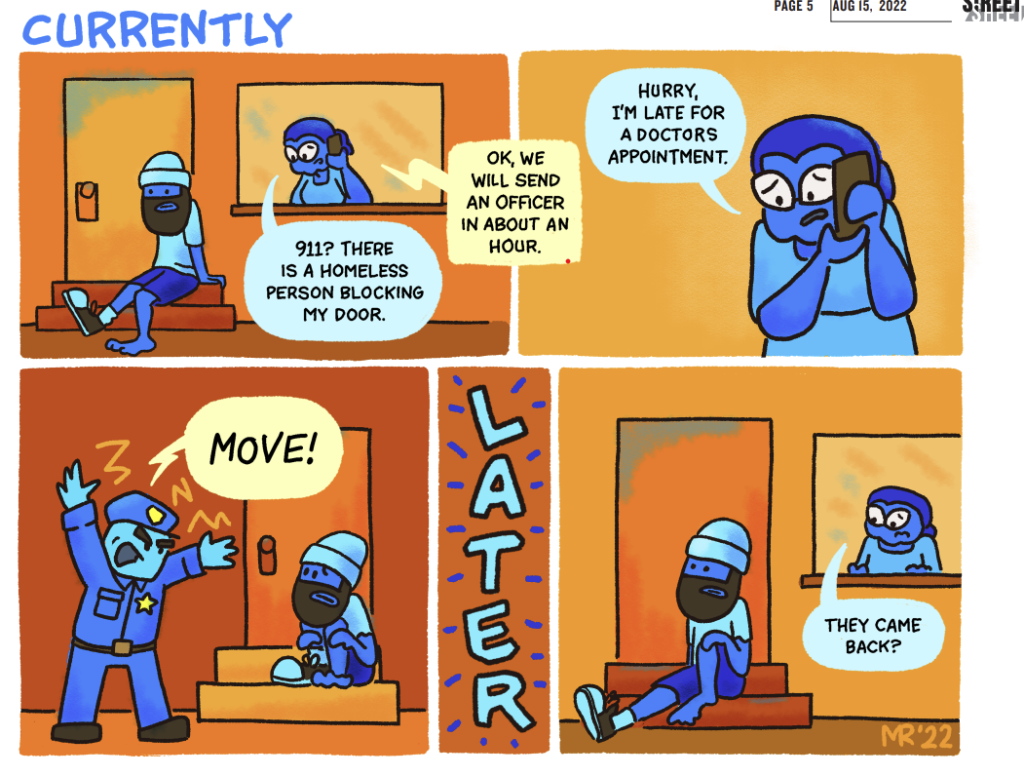
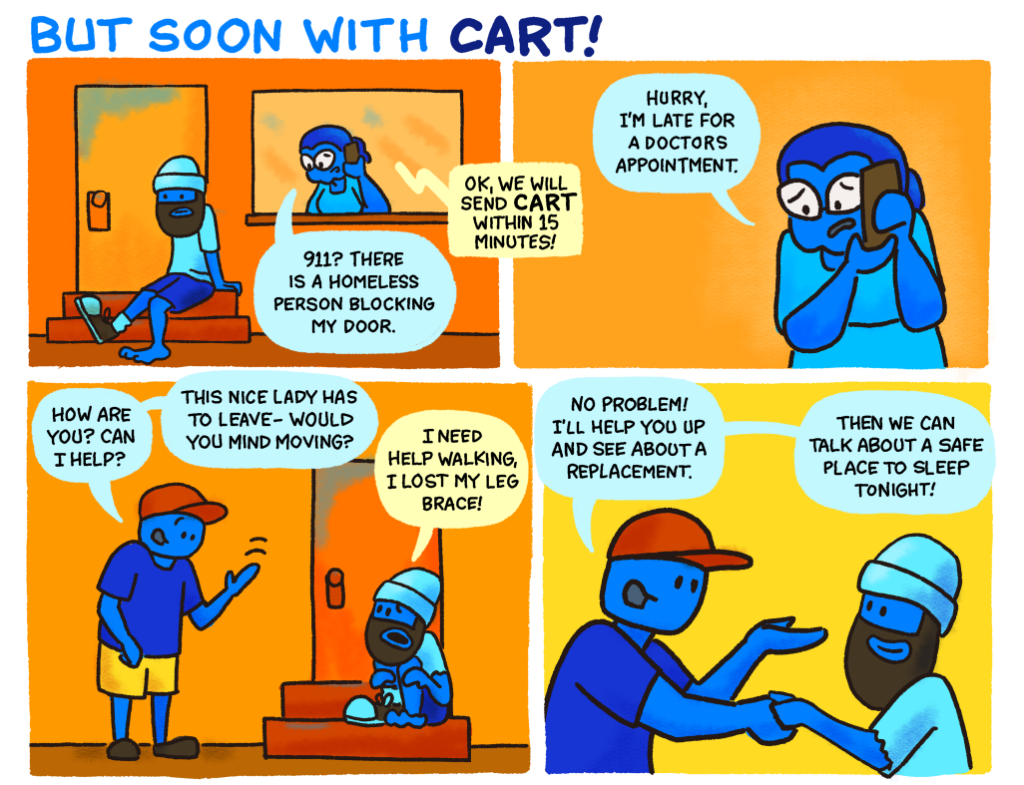
StreetSheet and StreetWise have pages on the their vendors, giving users a chance to get to know who they’re helping, but lack any information about them except their name and face, making it difficult to get to really know them. StreetWise’s biggest flaw is that their only source of content available to users are from their magazines and podcasts. Requiring issues to be purchased before being allowed to view them, it restricts the amount of information they can give to an online audience to raise awareness, making it more difficult to convince people to help. However, it doesn’t mean that the content they give out is lackluster. Their podcasts follow Angelica and her story as she struggled through homeless from the age of 12 and the magazines cover stories of people within Chicago, articles that address social problems like gender and race, and events that pertain to vendors and the community. But there are very few articles that pertain to the issue they are actually tackling: homelessness. Especially when you compare it towards StreetSheet, who’s podcast discusses specific issues within homelessness like Encampment Sweeps, articles that talk about stories about the homeless just as much as they talk about social events that are happening within San Fransisco, like how Donis, a flower lady, is facing her second eviction within two years. StreetSheet also gives access to their issues, which delves into extreme depth of stories of homelessness and their solutions and journey to tackle the problems at hand. One example of this is a cartoon they made to talk about Cart, a solution in trying to get homeless people the help they need rather than just chasing them away and not making any real progress.
StreetZine then matches StreetSheet’s standard and raises it further. Although they don’t have their own podcast, their issues include stories on homeless, addresses problems on homelessness, and have spotlights on writing and art submitted by people in the community, giving people a chance to voice their own thoughts and stories to a wide audience. Their articles continue to talk about people within the community and their contributions to help those in need like Bell, giving free haircuts to people within Stewpot. Then they have their press articles, highlighting people who’ve achieved accomplishments within Stewpot. Even more, they have art galleries of past events to give readers a glimpse into what the people involved with StreetZine and Stewpot are like, and to top it off, they make videos sharing stories of people facing homeless and their goals in eliminating homelessness.
The quantity and quality StreetZine brought from their videos, blogs, articles, and issues stand high above the other street papers, StreetSheet following behind while StreetWise lacks the firepower to keep the reader focused on the primary issue at hand: homelessness.

Involvement
You can’t just keep the reader engaged. To make progress, a street paper needs to get the reader involved, whether it’s the user helping those in need, or someone who desperately needs help to have a hand extended for them to grab. To do that, you need provide the resources that will make it easy for people who want or need to get involved to do so.
StreetSheet’s options are fairly simple. To give help, donate, buy the issue, or volunteer. To get help, visit their office to become a vendor, or submit works into their issues for pay. StreetWise expands on this much more, building off of StreetSheet by allowing people to give items that are in immediate need like hats, belts, and other clothing, creating merch to let people buy clothing while supporting the business, and offer advertisements within their issues, benefitting both StreetWise and any other business looking to grow. And when it comes to giving help, StreetWise doesn’t lack there either. On top of giving jobs as vendors to those in need, they offer S.T.E.P, a program that leans on their “hand up, not a handout” motto, by training those looking for a stable job through workshops, one-on-one sessions, and other services so they can become people who are strong enough to get a job and hold that job on their own. But once again, StreetZine takes it up another notch.
For people who want to support StreetZine, on top of donating money and volunteering, they are able to donate needed items, sponsor meals, or simply link their ID number to certain stores like Kroger or Goodshop and a portion of the money used when making purchases will go to Stewpot. For those in need of help, in addition to becoming a vendor, they have over 10 different programs to help homeless individuals get the help they need, whether it’s rehousing, obtaining food, art programs, or mental wellness checks, they have programs that ensure the health of those in need.
Each street paper has the ability to have people give and get help, but StreetSheet’s resources are extremely limited, only having the most simple options to get involved, while StreetWise and especially StreetZine have a much more in depth infrastructure in how people are able to get involved, and find a clear path out of poverty or a clear path in to help those stuck escape.
Miscellaneous
The final factor into making a strong website is all the extras. Bringing things that aren’t necessary, but will go great lengths in expanding a community into a physical and online presence and gain more support. StreetWise and StreetSheet both have podcasts, StreetWise sharing Angelica’s story of homelessness and StreetSheet discussing the big issues within homelessness. StreetWise also has two merch lines, Cloztalk, and Giveashi*t, both clothes lines to help support StreetWise while getting something in return. StreetZine has neither a podcast or merch, but rather focuses on in-person events, like Voly in the Park, a volunteer ran festival that features many non-profit organizations, hands-on projects, in person activities, and live entertainment.
While StreetWise and StreetSheet focus more on a larger online presence with their miscellaneous features, StreetZine puts their efforts in person to grow the community in Dallas closer together.
Conclusion
Of the three street papers, StreetZine had the best website. Although messy, the content and resources it provided heavily outweighed the bad. It also aligns with the data with Dallas having the lowest homeless population of the three cities, and although StreetZine can’t be the sole reason to why Dallas’ homelessness rate is so low compared to San Francisco and Chicago, it must have had some impact in the pursuit to eliminating homelessness.
What Now?
Eliminating homelessness isn’t a competition. Just because one city does a great job at helping those in need doesn’t mean that others can’t. We use what works, revise what doesn’t work, and learn from other people’s success to create a path of success for ourselves. We know what’s both good and bad in StreetSheet, StreetWise, and StreetZine, so by taking what we know and apply it, we can make better websites, better programs, and help more people enjoy some good soup.
Sources Used
Websites
“StreetSheet” StreetSheet, https://www.streetsheet.org
“StreetWise” StreetWise, https://www.streetwise.org
“StreetZine” StreetZine, https://thestewpot.org/streetzine
“City and County of San Francisco” Homeless Population, https://sfgov.org/scorecards/safety-net/homeless-population
“United Way” The State of Homelessness, June 9, 2022, https://unitedwaydallas.org/updates/the-state-of-homelessness-in-2022/#:~:text=The%202022%20Point-in-Time%20Homeless%20(PIT)%20Count,the%20lowest%20count%20since%202019
“Chicago Coalition of Homeless” Estimate of People Experiencing Homelessness in Illinois, https://www.chicagohomeless.org/estimate-of-homeless-people-in-chicago/
ivabalk, “Pixabay” Russian Borscht Soup, https://pixabay.com/photos/russian-borscht-soup-rich-4005732/
“Street Sheet” Street Sheet, The Coalition of Homelessness, http://www.streetsheet.org/wp-content/uploads/2022/08/StreetSheet_August_-15_-2022.pdf
“Street Zine” Street Zine, https://static1.squarespace.com/static/5339a518e4b0885962ab740c/t/632356af35ab3c72592c5e68/1663260343124/STREETZine+September+2022+Online.pdf