Sarah Calderini
By Ashlyn Coombs
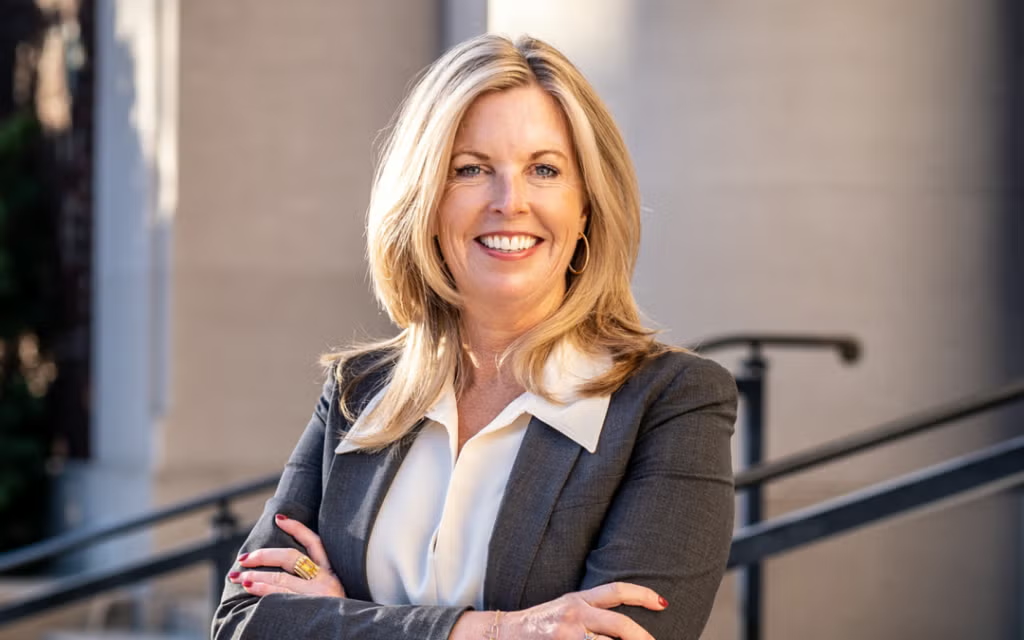
As a former Director and Board Chair of the University Music Society (UMS) at the University of Michigan, Calderini builds on a lengthy sales career at Procter & Gamble and a subsequent 16-year private business venture to bring a multifaceted perspective from the corporate, entrepreneurial, and non-profit sectors. She is a graduate of Union College (New York; BA, English), the National Arts Strategies (NAS)/University of Pennsylvania’s Executive Strategy in Arts and Culture program, and the EXCEL program in Arts Leadership & Entrepreneurship at the University of Michigan’s School of Music, Theatre & Dance.
Tell me about where you grew up and what your family life was like.
I grew up in the northern suburbs of Chicago. My dad was a lawyer while my mom was a psychologist and they were both very intellectual and curious and smart, funny people.
How did your parents influence you? And who has been your strongest influence in life thus far?
So, my parents always instilled a certain intellectual curiosity in me. Our dinner conversations were always pretty intense at times. They were both art lovers, which had a big, big impact on what I’m doing with my life today. They were the kind of people who were like “Ok, you’re 9 years old, and you don’t want to go to the symphony, but you’re going anyway. If you fall asleep that’s fine but at least you’re there.” They influenced me from both an intellectual standpoint as well as a character standpoint. They were both really fine people, and also very human.
What led you to your career?
I just think, overall, I’m a believer in the power of the arts to bring people together and to strengthen communities and that’s what drives me. As a non-artist, this is the only way I can impact that.
What are the goals you most want to accomplish in your work?
Well, I want more people to know about us, because we’re a tremendous community resource. I want people to understand what a gem this is and understand what we do is important and beautiful and wonderful. I would say beyond that, I would like to expand our program both on the stage and off. I want to reach more people in the classroom or wherever they maybe; the senior center or even a different zip code. I want to be financially sound for a stable future.
What are you most proud of accomplishing?
I mean, I have so many things I’m proud of since I’ve had such a varied career. As a young woman, I am most proud of that time because I was an award winning sales person and major person in an international corporation, so there was some great satisfaction in that. I also started and ran my own business for 16 years and that is not something easily done. I’ll say for both of those things, although they were both for-profit, the common thread is really just bringing people together, its just about improving the quality of life in a community for me. While I was on the board of the UMS, one of the things I’m most proud of is helping to bring to life, which is on its third iteration, is the Mini theater festival called ‘No Safety Net’. That was a challenging community moment to sort of try to explain to our stakeholders why this was so important, since it was a sort of edgy experimental theater, and it raised a lot of uncomfortable questions for people. I would say that what I’m most proud of in the Ann Arbor Symphony Orchestra is hiring our new music director. I am also proud of the symphony orchestra for coming together and making joyful music.
What would you do differently if you had a chance throughout your career if at all?
You know? I don’t think so. I think I haven’t always been super ecstatically happy with everything I’ve done in my career, but I do think looking over decades I’ve had a lot of really wonderful moments and have worked with really outstanding people and have made the world a little better of a place within my corner. No I don’t think I would do anything differently within my career. I think I’m exactly where I’m supposed to be.
Could you share with me something that you want to improve within the local music community of the Ann Arbor/Ypsilanti area?
I want to see younger audience members, more diverse members, and not just racially and ethnically, but also socioeconomically, as those coincide or don’t. I want our art form, classical music, to be considered not only relevant but essential to the life of a very enriched community. To contribute to the quality of life here.
Is there anything else you would want to share?
Given that you are a student at the University of Michigan, the other audience cohort I want to engage with more is the students. This is part of why we live here is K-12 and university students. This is a kind of young, curious and energetic place and I wanna deepen our engagement with students of all ages. And even if they aren’t students I still want to connect with them to share this project.
Trevor Soranno
By Rania Uppal
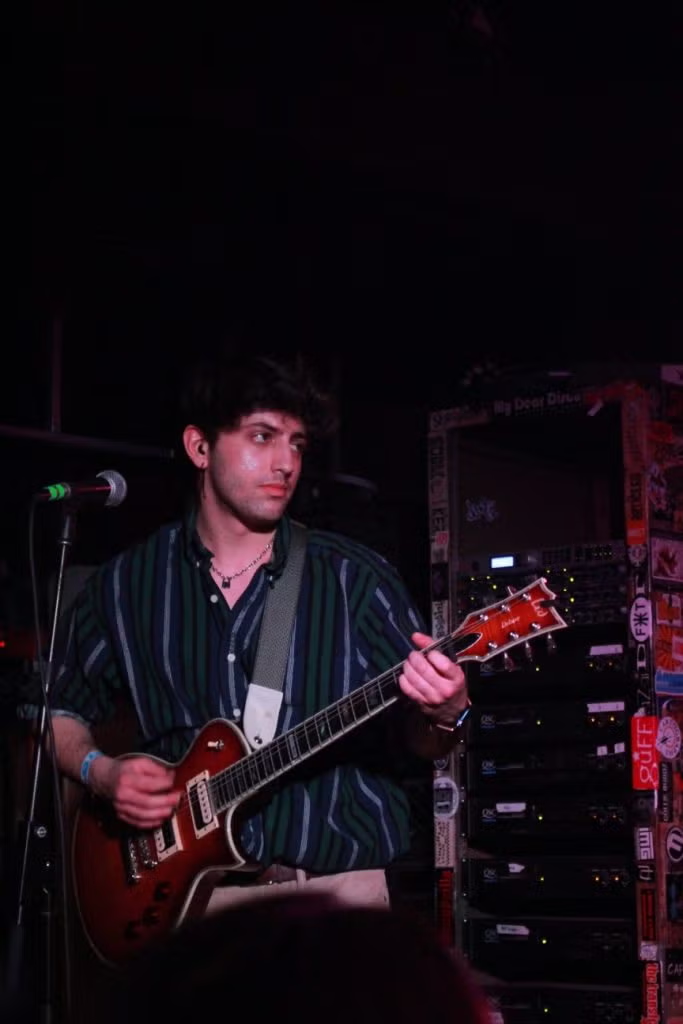
photo via Trevor Soranno
Trevor Soranno is a senior from Michigan studying Biology, Health, and Society with a minor in Music at the University of Michigan. He is one of two guitarists in the student band, “Cherry TV”, which performs covers of indie pop punk/funk at various venues in Ann Arbor. You can check out the band’s Instagram for updates @cherrytvband.
How did you get into music?
When I was a kid, probably nine or ten, I played a lot of video games, and one of my favorites was Guitar Hero. That was actually my first introduction to the guitar itself. Eventually, I convinced my mom to give me a real guitar and take me to lessons, so I took lessons for a couple of years, and I was kinda on and off with it but that was my introduction to it.
Tell me about the band and your role in it?
Yeah, so that’s a funny story. Originally, when I was a kid, and I was taking lessons, I was in a little band. We played a couple of shows with me and my other kid ‘musicians.’ Like I said, I was on and off with the instrument, but during the pandemic, I picked it back up. So I actually transferred here my junior year, but it was Covid, so my senior year was my first year on campus. I was a TA for a biology class- this is relevant, trust me- and one of my students was a guitar player. I found out that she played the guitar, so she and I kinda hit it off and were just talking about the instrument and the music. She was like, “Oh, I’m in a band, and I’m playing a show on Friday. You should come.” So I showed up to this house party, and they were playing in the basement, and I was like, “this is so cool.” After that, I reached out to her and said like, “hey, I want to start a band. Do you have any connections?” She hooked me up with a couple of people, and those people knew other people, and we just came together for rehearsal, and it worked. So that’s how the band started. As far as my role, I’m one of two guitar players. I mostly do rhythm stuff, but we kind of switch off in terms of the different parts that we play in songs.
Where do you see the band going in the future?
So right now, apart from some original stuff we’ve done here or there, it’s been mostly just covers, like crowd-pleaser songs which are fun and they get people excited. Then we had some internal conflict, and we had a couple of members switch out, but now we are kinda at the point where we want to evolve as a band and move to the next step of writing original stuff. So maybe go into the Duderstadt center and record something, get a collection of music we’ve created ourselves, build from there and reach out to different facilities and venues.
What is your favorite memory so far of the band?
There are a lot of interesting memories for sure, like our first gig ever. Not a great memory, but our very first gig- our bass player actually was not able to play because he got denied at the door. He accidentally handed, not his real id, to the bouncer, and they did not let him play. So we showed up to do sound check and learned during sound check that we weren’t going to have our bass player, so we had to find a replacement two hours before we played. So that was interesting. That was definitely something I’ll never forget, and the rest of the band will never forget. But I think my favorite memory was probably the first time we ever all played together. It was our third total gig, our second blind pig gig- our sort of redemption gig where we all came together and actually got to perform. That was just a great time.
What’s your favorite venue that you have performed at?
You know, funnily enough, the Blind Pig is great, and that’s where we play the majority of our shows. I think we’ve played maybe seven gigs in total, and most of them are at the Blind Pig. But in my opinion, the coolest place we actually played at was Skeeps (Scorekeepers), which was last October.
They host concerts?
No, they don’t, and that’s why it was so cool. We had a connection somehow, and we were able to put a gig together.
Do you have any upcoming performances?
We actually have one later today. It’s not our full band, it’s a lowkey thing at the Umma, and it’s like a little showcase thing for a bunch of music students to come and play. We are doing a little stripped-back, acoustic thing with four of our members- not all of us. And then we’re gonna take some time after this gig and after the break to really just grind out the creative stuff and try to make some music. So we’ll probably chill out on the gigs for a few months, work on making some material, then get back out there.
Michael Lutz
by Diego Sanchez-Burks
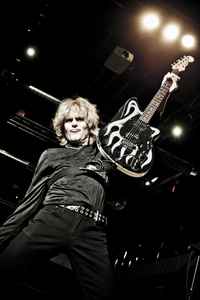
Michael Lutz is a musician, producer, and instructor from Ann Arbor, MI. He wrote numerous hit songs with his group Brownsville Station, most notably “Smokin’ In The Boys Room”, released in 1973. Lutz has also produced records for Ted Nugent and others. He still resides in Ann Arbor, writing original music and teaching guitar, bass, and piano.
What was your experience early in your music career in Ann Arbor?
I started out opening for some of the larger acts that came into town, playing cover songs with The Talismen. This is way before the age of bands being able to make money and play live and do their own material. Nobody was buying into it. Eventually, we built enough traction that I was able to perform my own music.
What were some defining moments from The Ann Arbor music scene that you experienced?
One that comes to mind is seeing Iggy Pop live in concert. It was all noise. And it [Iggy] was slowly undressing on stage, and, scratching his skin, and diving into the audience and shit. Iggy was different from anyone else we had ever seen.
How involved were you with the counter-culture movements building in Ann Arbor at the time?
I have never believed that it’s a musician’s right, just because they become famous or semi-famous, to stand on a soapbox. So I steered clear of that my entire musical career. Yeah, for sure, I may have a political angle in one of my songs, but like with any good songwriting, you don’t come right out and say it; it’s cloaked in the mystery of the lyrics. Still, I was aware of what was going on and I had my views. (In Regard to the push for Title IX) I was always pissed when I found out the money that these women weren’t making, and back in the day when the marathons were becoming really popular, there were some women runners that were just as popular and just as known in the United States as the men, and they were getting paid one 10th of what the (men) were getting paid. So I was on a personal campaign.
Where were some key venues during your time in Ann Arbor?
Aside from the Blind Pig and places on campus, The Fifth Dimension was really special. I remember seeing Jimi Hendrix come to perform. I went to the fifth dimension, there were only about 30 or 35 people there. They were all musicians because we were the only ones that knew about this guy.
How has music changed since you started out?
Well, it became more of a money-maker. The Beatles started it because for the first time you could actually make money in a band. Berry Gordy really changed things. He made this closed-in environment, and he had control over everything. The results were there, with all those Motown hits. But a lot of people here stayed away from that, especially guys like Iggy.
Ashu Acharya
By Krupesh Patel
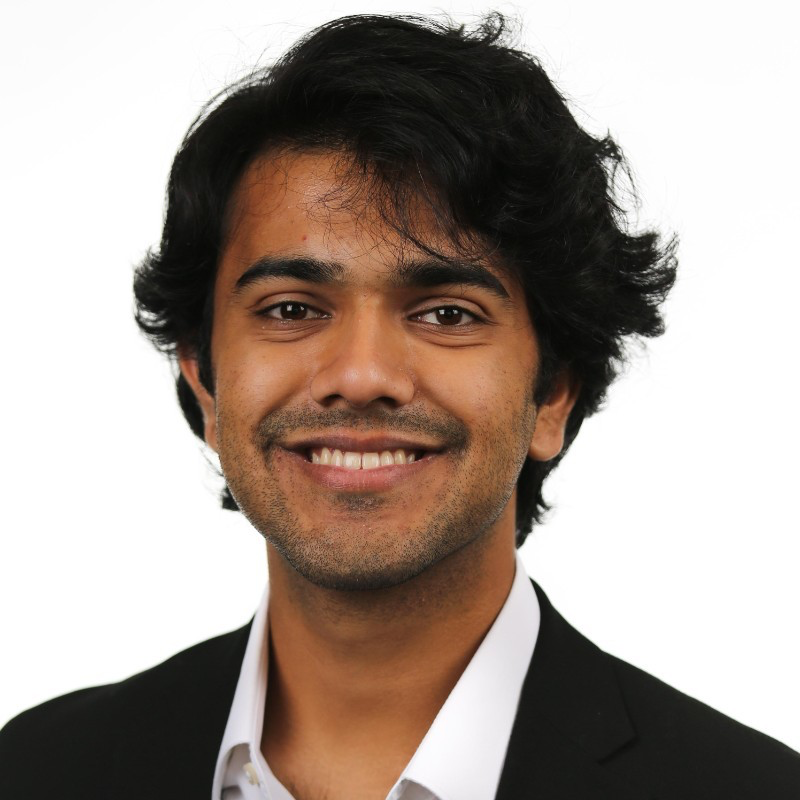
Image by Ashu Acharya via LinkedIn
Tell me about yourself
I am a Senior at Michigan State studying Computer Science. Originally from Canton, Michigan, I have enjoyed different forms of art growing up. I danced in high school for various teams. In my free time, I enjoy spending time with family and friends. I like to do yoga and meditate as well.
Why did you choose to study at Michigan State?
Michigan State has a strong balance between academics and social life. I enjoy the diversity of courses offered at the university. The campus has great sports teams. I enjoy watching the Spartans basketball games. Being an in-state student, I also had other friends who joined me at MSU. I wanted to stay in-state to be close to my family.
What musical group are you involved with?
I currently sing for Spartan Sur which is a South Asian A Cappella group on campus. We practice 3 times a week in the evenings. Although I joined as a Senior, I was able to get close to the other members on the team. We have had one performance so far, but hope to attend a few competitions later this school year.
How did you get interested in singing?
I developed this interest recently. I sang at my brother’s wedding over the summer and enjoyed my experience. Coming back to campus, I realized I wanted to continue being involved with singing. I tried out for Spartan Sur and was fortunate to make it!
What is one piece of advice that you would give to someone interested in singing?
I would say to focus on yourself and always try to improve. Don’t worry what others will think of your singing. Surround yourself with people who you enjoy being around. Whenever you can, try to step out of our comfort zone. It can be scary to perform for a large audience, but it will make you a better singer over time.
Abigail (Abby) Lysinger
Alison Albrecht
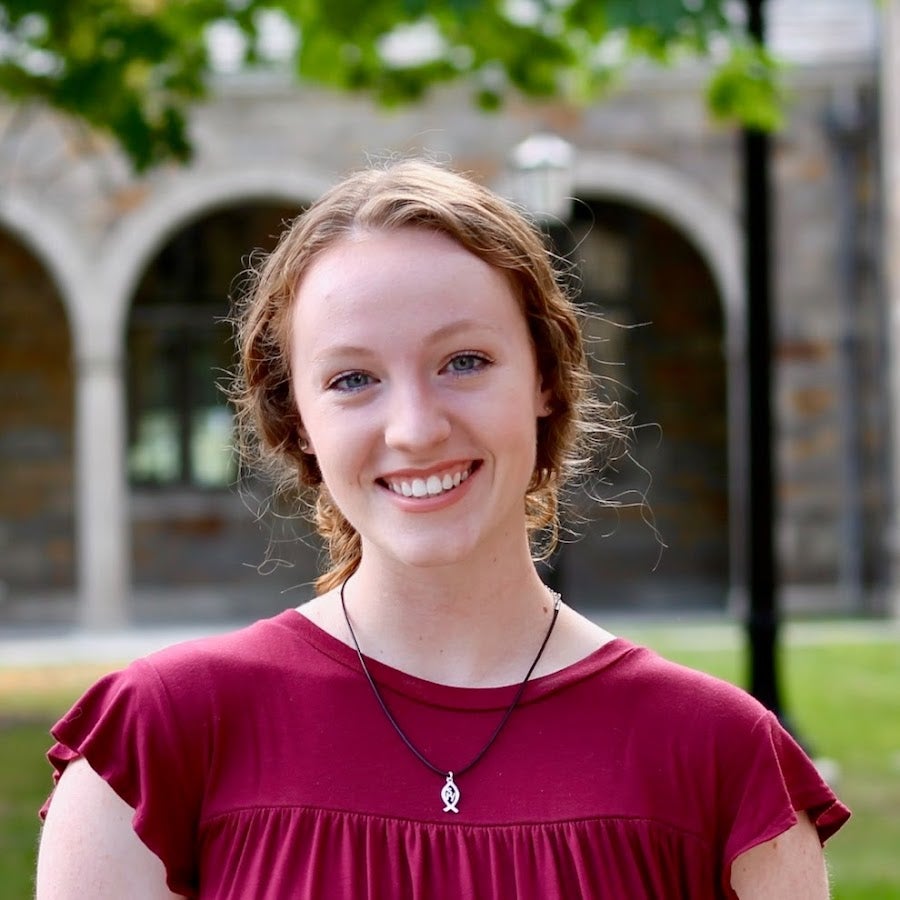
Abigail Lysinger is a junior mezzo-soprano voice performance major at the University of Michigan. Originally from Dallas, Texas, Abigail has been playing music for as long as she can remember and she has no intentions of stopping. Samples of her work can be viewed on her instagram page, @abbylysinger.
Why did you choose to study at the University of Michigan?
When I was in high school my mom taught at this festival in Piobbico, Italy called Brancaleoni International Music Festival… She realized they have a voice program there… and she asked them if I auditioned and they accepted me would I be able to go, and they said ‘For sure’. So when I was 16 and 17 years old I went there to study and a lot of the voice professors [at Brancaleoni] are tied to [University of Michigan]. I chose Michigan because I met my current voice teacher in Italy when I was 16. Michigan was the only out of state school I applied to, otherwise I only applied to places in Texas.
What style of voice do you study at the University of Michigan? What are some of your favorite pieces to perform?
My degree here is Bachelor of Music in Voice Performance, which is the most focused [degree] on classical training… I have a pretty regimented repertoire list that I have to complete. I have to do songs in English, French, German, Italian. I have to do specific eras of music and operas, stuff like that. I am fully classically oriented… but obviously, I do enjoy singing other things. My favorite aria to sing is called “Va! Laisse couler mes larmes” from the opera Werther by Massenet. It’s in French and it’s just very short and dramatic – I love it. Right now, I am learning Gypsy Songs by Dvorak in Czech… and I think I’m going to do that for my recital.
Do you have a favorite performance at the university? Perhaps a favorite moment in an ensemble or solo?
My freshman year, pre COVID, we did this modern oratorio choir work with the chamber choir by David Lane. He’s a living composer who was a composer in residence [at University of Michigan]. We performed an oratorio called “The Little Match Girl Passion”… It was a really big project for us, because we staged it in the UMMA [University of Michigan Museum of Modern Art] and we had to memorize everything… with the blocking. But we got to work with our old staging director that we had for a while, and now he’s working at the Chicago Lyric Opera. Matthew Ozawa – he was just the best. It was cool to be able to portray [the oratorio] in a theater-esque way, but it was still a choir. It was a really big accomplishment for us.
What are your personal career goals following graduation? How do you see your career as a vocalist evolving?
I don’t know exactly what I want to do, but I want to make good music with good musicians. That is the bottom line for me, since this is like my livelihood and I have a lot of passion for it, but I don’t want to be half-assing things. I want to be involved in music that is evolving, but that is also respecting the past. I think nowadays there is a really fine line between [considering], do we study this composer because they were anti semitic? Which obviously, we do not support, but their music is extremely important to the canon. Or, can we do something now that makes [the issues surrounding a piece/composer] more well known to the average listener? I know I’ll be singing for a long time, but I’m also extremely interested in choir and conducting. So, whatever I’m doing, I want it to be with people who are smart musicians, and who have the same sort of goal as I do.
What is one piece of advice that you would give an aspiring vocal student or someone interested in entering the field of classical voice?
I mean, just keep going. It is really, really hard to take something that was your hobby, and make it your studies. It’s really, really easy to lose joy and lose sight of why you’re really doing all of this… The comparison game is also really hard, especially at a huge school like University of Michigan with a huge grad program. It’s really easy to look at the 25 year old grad students and be like, ‘I’m not like them!’ But of course you’re not like them – you’re 18! So just keep going. Do your own thing.
Zagc Profile
Meghan McCarthy
Zagc is a sophomore at the University of Michigan from the bay area in California who creates hyperpop, breakcore, and noise mixes aloing with original music. He got involved with Memco in Fall of 2021 in order to utililize their teaching resources and DJ controllers. After hosting a Halloween party with them where he built an installation that went along with his set, he became much more involved with the student organization. He began making music and mixes in 2019 and 2020 in audacity, which to him is like “getting into photography through snapchat,” which was mostly ambient and noise music. He’s inspired by the style of artists like 100 gecs and Lil Texas, and some of the music produced by the UK based “Off Me Nut Records”.
Memco described your Exposure Mix 040 as “a combination of hyperpop, breakcore, and dariacore, with a little splash of ‘80s alt rock on the side.” Your music is clearly very multifaceted, how has this complex nature of your music developed throughout the years?
I guess I was more into indie rock and stuff a couple years ago, and as I got more into DJ-ing I first got into hyperpop and then into breakcore, and electronic music. With DJ-ing I like to use that and a little bit of something different. That mix is probably what I’ve spent the most time on out of anything I’ve made. It was a lot of hyperpop and crazy stuff, and there’s a Cure song in there also.
Some of your music on soundcloud interweaves some references to media from the early 2000s like “The Duck Song”, and party anthems like “TiK ToK” and “Mr. Brightside”. How would you describe the influence that this era has on your music?
I just really like when you go listen to people DJ and there’s songs that you know. I feel like the scene of people who are into DJ-ing is kind of pretentious sometimes, and they can overlook the fact that like, Ke$ha makes good music too. It’s also just funny to include things like that. For music to be really good it should make you laugh, not always, but sometimes.
I noticed that you also have done some work with WCBN. Have you found that your broadcasts have helped you and other artists like you gain exposure? And what other ways have you gotten your music out there?
I don’t actually know how many people have listened to what I’ve broadcasted on WCBN. I’ve gotten to play the show “Crush Collision” twice now, which has been around for a long time and some huge people have played it years ago, like Drexciya and Autechre, so some people have probably listened to that. I’ve played some of the songs I’ve made on the radio, but I’m more into the DJing than the production. The production has been a side thing for me, at least for now.
What do you hope that your listeners take away from your music and are you aiming to create a specific type of experience? Have you found that these goals have changed throughout your music career?
I’ve only gotten really into the DJing and trying to make music a little less than a year ago, and I’ve had a pretty similar vision the whole time. I want my mixes and music to sound really fast, and kind of silly, and I like playing stuff that people haven’t heard before, especially around here, which is mostly hyperpop. I really want there to be a bigger hyperpop scene in Ann Arbor, or even Detroit, and there isn’t much of one at the moment.
You’ve got some really fun visuals on your instagram and soundcloud. How are these visuals created, and what’s your inspiration for them?
I’ve made almost all of the visuals on my social media in Photoshop by collaging different images. I went to the Machine Girl show in Detroit about a month ago, and their imagery is really inspired by fantasy, like werewolves and stuff like that, and I thought it was cool. So I made probably ten posters for the show I played on Crush Collision a few weeks ago which took a lot of inspiration from those themes.
Lastly, what’s in the works for you and where do you see your music taking you in the future?
Recently I’ve been getting a lot more into “ghettotech” which is very different from the hyperpop stuff I’ve done. I’ve been working on a couple of tracks… which will come out whenever I finish them. I think the biggest thing with DJing is that I’m trying to have a lot more events happen in Ann Arbor and the surrounding area that are a little different from the usual. People don’t seem to care as much about shows that are DJing as opposed to bands, and they also don’t seem to want to go to a party after midnight, which I am desperately trying to change. I’m currently co-organizing in a barn around Ann Arbor in a couple of weeks that I’m building a big installation for, which will be a giant bull head with light up eyes.
Where can people find you?
Mostly on my Instagram, which is @zagczacgzagc, or on my SoundCloud, which is @zagc
Next year I’ll be the vice president of memco, and in the fall we will be DJing on the diag with a bouncehouse, so look out for info about that.
Sophie Herdrich & Atomic Sauce
Maria Scavnicky
This interview shines light on Sophie Herdrich, a junior at the University of Michigan and the lead singer of the band Atomic Sauce. Herdrich grew up in the music scene her whole life and decided to start the band as a testament to her father’s college band Atomic Café. There will be a collaboration of the two bands, Atomic Sauce and Atomic Café, in mid-April at the Blind Pig so stay tuned for updates to come!
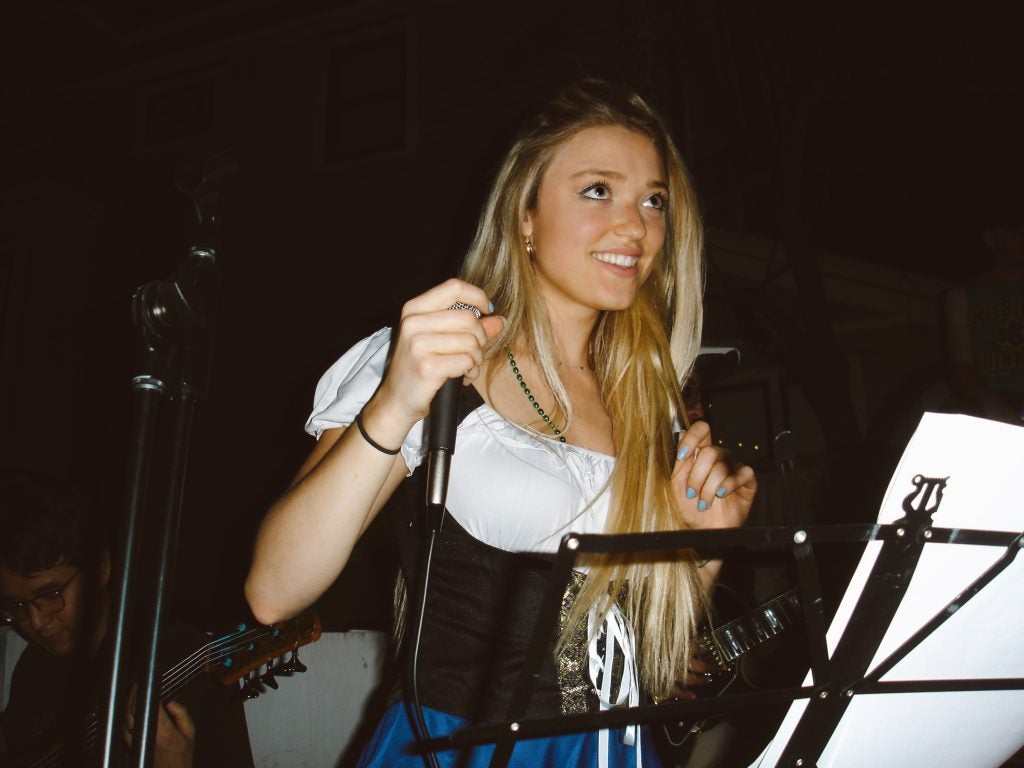
How did you get started in music in the first place?
So like my family is crazy musical, like I’m literally the least musical in my family. My older brother, he’s 24 and he’s like a producer with five albums out. And my little brother’s probably the most talented. He’s 15, but he’s just like this little guy and he’s crazy talented. He literally can pick up any instrument. So like, I’m the black sheep of the family.
<Laugh>.
My dad, honestly, he raised us to love music and made sure that we listened to everything except the country <laugh>. But yeah, he’s a pianist, so he plays keys, and he also plays drums. And he is the reason why we kind of started the band. My dad also went to Michigan and he was in a band called Atomic Cafe with all of his buddies. So I always thought, that’s so cool and I have to do that. And I was like, if I graduate college without even trying to start a band I’m gonna regret it so much. So yeah, growing up with a really musical family pushed me to be immersed in music. We have a recording studio that we’ve been building in our basement, which I live a mile away from campus.
You started the band called Atomic Sauce after your dad’s college band Atomic Cafe, how did you make that possible? Are they just a group of your close friends or did you have to find people in the area to start the band?
It was half and half. I lived in Alice Lloyd my freshman year. And you know how there’s like those like practice rooms, like those band rooms. I don’t know if you’ve been there before, but I actually met this one kid, Jared and he’s a drummer. He was the first kid I ever met in my dorm. And he was like, oh yeah, I play drums. So we were bored in the dorms, cause you know, like the day you get there, you don’t know what to do with yourself, day one of college. So yeah, we jammed. We practiced in the basement and we were just jamming and he’s crazy good at drums. He’s very talented. And then COVID happened and the whole time he was like, we have to start a band. And we almost did. We started out with a punk band, but like British punk music. And then we were like, no one’s gonna wanna listen to this. <laugh> So we had to change up our style from the beginning. We randomly reached out to people in the Jam Club, which is literally exactly what it sounds like. You just jam. <laugh> We then randomly found another member who is a 31-year-old grad student and he is literally the best out of all of us. I have never seen someone play the bass like him. So year, there’s five of us in the band.
That’s really cool. So, I heard about the concert you had for undergraduate students called “JamRock” on St. Patty’s Day. What inspired you to do this concert?
I was driving and thought of the idea. We actually didn’t get to do The Battle of the Bands because someone in our band literally runs it. So we can’t be involved because it’d be bad PR for us to win it or even have a chance, you know? So I was like, dang, I wanna do something. So I thought, I wanna have a big concert where random people come and something different than something at The Blind Pig. What if we just made our own stuff up? So I was trying to look for a date and the only day that we could do it was that Thursday which was St. Patty’s Day. It was only a week-and-a-half before it, and so I reached out to my boyfriend and he set up the whole thing. They allowed us the space and it went so well. Usually, this kind of thing takes at least three weeks to put together with that many people, so it was just crazy.
But it was just a beautiful thing because the sun was perfectly setting while we were playing. And it was that first warm day. So I was like, oh my gosh, this feels like a summer grad party. The beautiful thing about it was that people in the senior class went up to the guy allowing us to use his house and they would go up to him and say that it was the best day of their senior year. So, yeah it was such a good time. And live music just really changes it. I was just so happy everyone pitched in so last minute. I just thought it was really cool.
I actually attended JamRock and I couldn’t help but notice all the popular music and sing-a-longs you were playing. Is that something you and the band normally do?
We like to find the gig we’re doing and then literally match the set list to the crowd. We’re really intentional about that because we don’t want people being like, like we want you guys to sing along and everything. We knew if we did this concert, we would have to balance the music. So, we knew that when we played “Before He Cheats” we would also have to balance it out by doing “Smells Like Teen Spirit” for the guys. The way we did the set list allowed everyone to at one point have a song during the concert.
It definitely worked because I had a great time! So, you were talking about performing at the Blind Pig in Ann Arbor. Does Atomic Sauce play there regularly or do you like to switch it up a bit?
We have gone to the Blind Pig twice, and then we have an upcoming one with my dad’s band in April. For some reason, none of them moved away from Ann Arbor after graduation and they still live here. They got back together as a band and they are incredible. And so we’re actually playing with them on the 28th of April. It’s just such a cool story that my dad’s band, the same people who played in Rick’s, is going to be playing with us. But overall, we really love the Blind Pig because it is a real music venue. You know what I mean? It has very different vibes and our setlists are definitely really different from how we played at JamRock. The thing about the Blind Pig is that it is more for performing, you know?
What other venues have you performed at?
We just did a co-op at the Luther co-op and then we have just done the Blind Pig. And then a lot of house parties. Like people would be like, oh, it’s our buddy’s birthday. And we perform. So, we perform at a lot of different venues.
Lake Mosaic is a Midwest Easycore punk band. Here is our discussion where three members Matt, Naveed and Adam reflect upon the creative process, favorite performance moments, and upcoming ventures.
*Note: M refers to band members Matt, N is the newest band member Naveed, and A is band member Adam*
Speaking of, what is your creative process like in writing/producing music?
A: A lot of the time, we might kick off an idea on our own, usually starting with a guitar riff. For example I might flesh out a riff with some program drums and/or play bass on it to get a working instrumental demo. After that I would send it off to the rest of the guys and get feedback/opinions. From there, we make tweaks and changes together.
What is the driving force and value (or values) behind your music?
M: For our first album, Adam did a lot of the instrumental. As far as lyrics go, I went through a difficult time a couple of years ago including a bad relationship, a breakup, fallout from that and immediately the start of the pandemic right after. A lot of the songs deal with those things, and try to make sense of them and give some sort of positive and uplifting message.
What are your goals as a band, in the short or long term future?
A: For the short term we are already writing our next release, we really jumped right into that. We are currently planning out recording and are very excited to do that. Also more music videos and some small tours in the near future.
What is your favorite memory so far of the band?
A: One moment that really stands out to me is our first headlining show. Naveed was not in the band at the time but was filling in for another player. I remember playing and I could see people in the audience singing along: it felt like a big payoff moment.
N: It would probably be my very first show as a band in Ann Arbor in October. We had all been practicing since august. Before then, I was at University of Michigan and didn’t have time to play music all that often, so October was my first live performance since before college. I was super nervous before the first show; I worried about forgetting everything. That show reinforced that I know how to play and I won’t choke.
M: I’d say our album release show. There were a fair number of people who had already listened to the album and knew all of the words. To me that was pretty cool. Also anytime people come up and have something to say about how our lyrics have impacted them.
How do you strategize/prepare being in-synch during shows?
A: In general, I feel that we are really good at recovering from brief mishaps. If we are off with each other, typically we lock right back into it after a few seconds. Our goal is to ingrain the muscle memory of our set through practicing on our own and with the group. That way, we can be completely in the zone and can think more about interacting with the crowd rather than the notes.
M: For our first show, I wasn’t super nervous but hadn’t been a lead singer for a while. I was very cautious about what I ate or did before the show. Every show we have now, I go into the same structured routine again because it didn’t fail. I also think we go on autopilot when playing a gig. We are in the zone and doing our thing.
If you feel comfortable, please share any upcoming performances or events you would like people to know about.
A: Sure! We have a bit of a break now to do some writing in the meantime. But, we are playing May 13th at Crofoot in Pontiac. The headliner band is Parti and I’m friends with a couple of guys in that band. We are also playing May 26th in Saginaw at the Hamilton Street Pub.
Sarah Calderini Profile
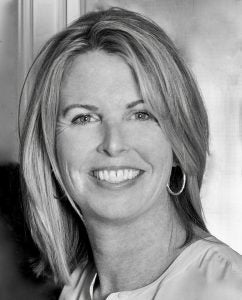
Sarah Calderini, Ann Arbor Symphony Orchestra’s newest executive director, has a long history in sales and private business. According to her, this background helps with her current position by allowing for “excellent training to learn how to be disciplined in making strategic choices and balancing a budget” as well as “fueling the kind of energy of managing risk taking”. Her shift into the arts community was sparked by a long interest in all genres of music and how music “offers moments for real transformation and transcendence” and “has the ability to change people’s lives”.
What role do you think the Ann Arbor Symphony Orchestra plays within the local music community?
That’s a really good question. There’s so much music here and it’s so great. The fact that you can go to an A2SO concert, a jazz concert at the Blue Llama, go to the Blind Pig, go to Hill auditorium and catch all sorts of things, on and on to the Ark. Everybody’s got a role to play and I think a mistake would be to live in this world very narrow minded. Again, nobody’s got the corner on this market and we ought to be energetic omnivores because one experience enhances the other. I think we enhance each other and we can learn from each other. Together we make this incredible, musical ecosystem in Ann Arbor and South East Michigan.
Yeah I think it is such a diverse music community here, and you guys at the Symphony seem to be one pillar connecting with each and every other one. I also understand that the AA symphony orchestra has a focus in community service with surrounding schools, daycares, libraries, and other locations. Could you tell me a little more about the community service work your organization does and what the goals of this work are?
Yeah I’d be happy to. I think it’s a real commitment to two main things. One is lifelong learning. We start with kids as young as pre-K and engaging with them and our kinder concerts that we have at libraries throughout town. We have another program that’s just really catching fire called My Song where we go into the public schools and teach kids the fundamentals of songwriting and they get to actually write their own songs and we play it for them. It’s an afterschool activity and sometimes even within their classroom time. We also bring visiting artists into schools for these real touchpoints to have these moments with elementary school kids. We have middle school concerts, youth concerts that we put on at Hill auditorium, and we have programs in the senior living communities. I’ll take it personal for just a second because I think it’s relevant. My mother had Alzheimer’s and what a lot of people don’t understand is that Alzheimer’s is a terminal, neurological disease. Your brain gets formed starting in the back, which is all your involuntary functions like breathing and then it starts moving forward so your last thing to be fully formed is your frontal lobe which is your executive thinking center. I don’t know if you know the accounting term LIFO, last in first out, but it’s a way that they advertise and depreciate assets. So when you have a disease like Alzheimer’s, the last in is the first thing to go so that’s your executive functioning which is why people lose their ability to manage their affairs. Then you move over and it’s hearing and sight, and then it moves back and your brain starts to really decay. You start to lose all these functions and the very last thing to go is your limbic brain, your involuntary functions. You may not be able to speak, you may not be able to eat alone, you’re immobile. But I’ll tell you, as I lay in bed with my mother for the week that she was dying we listened to music, her favorite music which was a lot of classic, a lot of opera, a lot of jazz, and a lot of church music, and I know she could hear everything because I could see it in her eyes even though she couldn’t communicate with me. It’s the last thing to go and one of the first things to come in. Our parents sing to us while they’re rocking us, and if it’s all done right you have music for your lifetime. And you can’t say that about many things, so we’re really committed to lifelong learning and lifelong engagement and that transformative thing that can happen within the context of listening to music. The other thing that we’re really working on is addressing some EDI issues. The best way to do this is to go out to people, not force people to come to us because some people may have transportation issues, some people may have mobility challenges, some people may have financial challenges that will disallow them, and some people may be intimidated to walk into a theater and not know what to say or wear. We need to work on that, but in the meantime we need to go out there for accessibility reasons because we know how music enhances people’s lives and enriches communities. So if you can’t come to us we will go to you. That’s why fundraising and a commitment to these engagement programs that are supported by this fundraising is so mission critical for us. It’s not just about the concerts we put on 8-10 times a year. It goes far beyond that. If we’re not engaging with people, it will keep being the same type of genre, the same type of experience, that it’s been for hundreds of years. We want to be welcoming, not alienating.
Switching gears a little bit, but as executive director, what is your vision for the symphony orchestra in the coming years? Are there any changes or goals you envision?
The most immediate goal is very tangible and measurable and that is to hire a permanent music director. In other words, the conductor. We have been without a music director for 3 years and that’s been incredibly challenging. Toward that end, that’s the first thing and once that’s in place that is a whole body of work someone else can do that’s much more qualified to do that than I am. And that’s much more appropriate to do than a visiting conductor because our visiting conductors, although they have been fabulous friends and allies of the symphony, aren’t here on a permanent basis. That will be very important and then I can really focus full time on what I do and what our staff can do and what our programs can do to build our audiences. And by that I mean not just in terms of dollars or as we like to say it in the business “butts in seats,” but how we can expand in meaningful and judicice ways into these engagement programs. There are all sorts of ways, sort of tactical ways we can get to that strategic choice. And then more importantly, what I’ve said to the staff from day one is if you’re not doing one of 3 things: building an audience, creating an impact, and raising money to make sure we can do those first two things, then don’t do it. We have, for example in those three areas, programatically looked at how we can make our program more welcoming. In other words, what composers are we presenting? Do we have some living composers, do we have BIPOC composers, do we have female composers? When we talk about impact that does get to more of that community engagement and education piece which is how we are actually doing relative to changing people’s lives. And again we can measure both of those things in numerous ways and then we can put attainable stretch goals for our fundraising so we can continue to expand our programming, both on the stage and off. Those are very real aspects, and the last one especially, not super glamorous aspects of the non profit art sector. Again another colloquialism is no money no mission. But again, you can’t just go out and raise money for raising money’s sake. It’s got to have some relevance to the people who want to engage in your mission, share it with you, and support it with you. They have to be invested in it.
I appreciate you mentioning trying to work with different types of composers and trying to think of a more diversity, equity, and inclusion focus. I think this also comes a little bit into my last question I wanted to ask. I know, being a college student myself, symphonies seem to cater more towards an older audience. Do you think this is the case with the AA symphony orchestra? Have you all attempted to broach this issue of an age barrier with going to symphonies and listening to classical music?
Yeah absolutely, another super thoughtful question. I think three things. First of all, even in Beethoven’s day, people were decrying the death of classical music and asking when are the young people going to come in. But, the young people do come in. Part of it now is, there are so many choices. You can sit on your phone and go nowhere and maybe still have a very enjoyable evening watching something, whether it’s live or a movie. So that’s a challenge. I think the challenge moreso lies in looking around the audience and realizing there are a lot more young people in the audience than we think there are. I like to say, the younger people are in the cheap seats that are in the back of the balcony because they’re students and they can’t spend more than 10 or 20 dollars on a ticket. Let me just say, as a sort of prompt and challenge to you, symphony concerts are over by 10 o’clock at night. There’s still time to go out and have a full night of partying and having fun. I was a college student once and it wasn’t any different then. I think there are a lot of young people who are coming. I think the last thing I would say is that different things work at different times in our lives. When I was forty and I had young kids, I was working, chauffeuring, the head chef, the janitor, you know. I was doing so much that I was either way too exhausted to go out or when I had really young kids I would have to get a babysitter and that was expensive and hard to find. But once my kids started to self liberate, become more independent, more autonomous, and be able to be left alone, it got easier. I’ll go back to my P&G days. One of the things a lot of people do when they do branding is talk about entry-point marketing. They talk about how your life changes, for example when you first have a child and all of a sudden what you’re interested in buying changes so radically because not only do you need diapers and formula, but you need car seats and other things. That’s entry-point marketing. And when you get loyalty early with the consumer, or in our case with the symphony, audience members, you tend to keep them, but it’s harder to do in those super busy years. When you get to the exit point of that stage of life, that’s another marketing opportunity. So maybe instead of being there when you’re forty, you’re there when you’re fifty. And maybe you go before you’re forty and you’ve already started the habit.
Rod Wallace Profile
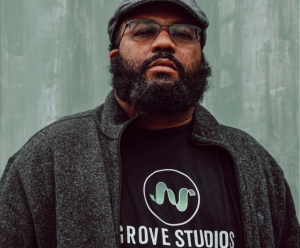
Rod Wallace is a PhD student studying music at Eastern Michigan University. Rod is a producer and founder of Double Negative Records. Rod focuses on projects that empower young African American men.
I’m going to begin by asking you the same question you asked all of us when you visited our class: What has been the most influential album in your life?
The most influential album for me was America’s Most Wanted by Ice Cube. I was 14 when it came out in 1991. The album was so impactful because I was becoming more curious about social issues as a middle schooler, as well as African American history and different ideologies related to the history of black people. Ice Cube planted himself firmly in what was in the present while also looking backwards and aligning himself with the ideologies of people like Public Enemy while also being a little more aggressive. For me this album was intellectual to a degree; it was focused rage, which was why it was so impactful. It has led me to a lifetime of being interested in learning about socio-political elements of rap music.
Speaking of your life, can you walk us through your journey through music and how you ended up where you are today?
I grew up in Flint. I had a close relationship with music from an early age. My ability to absorb written information allowed me to be very successful in school from a young age. Music was entertaining to me, and the iconography was interesting in how black musicians were characters of respect in our society. I began creating music at ten years old. As I graduated high school I was going to study musical production, but instead chose to go into education. I started a record label in college and produced an album, and then took a step back from music to focus on my career as an educator. I taught middle school Social Studies in northwest Detroit, building up elements of hip-hop in my classes to engage the students. I’m now studying at Eastern Michigan, studying both the cultural impact of hip-hop and how music can be incorporated into education.
In 2001 you cofounded the record label Double Negative people. How did that come about, and are you guys still active today?
I started it with a guy named Mike Mosley. We produced a number of records. I focused on the audio engineering while Mike focused the management side. We still work with several different acts, including the Dirty Ol’ Men, a group of thirteen of us who meet every year to make a record.
In 2019 you released your three solo Professional Development albums. What was your inspiration and your goal with those albums?
That’s an interesting story. I hadn’t made my own music since 2007 as I was focusing on my career as an educator. My wife bought me a little machine micro to start making music again. As I learned how to use this new equipment I learned a bunch of other things. I took a class where I was making beats every week. I began to make compilation albums of these beats. I began making those three albums in 2016, and released one in 2016, 2017, and 2018. I called it professional development because I’m an educator at heart, and because it reflects my growth over time, and I think you can hear that development in the albums.
I listened to your Formula 734 project. Can you talk about how that came about?
I made some connections with an Ann Arbor hip-hop group, the Athletic Mic League. I connected them with My Brother’s Keeper, an organization built around providing economic empowerment to young men of color in the country. I had the idea of getting together a group of young men of color to discuss issues facing them, and then turn them loose with local artists to make a record. We made a documentary about the process that you can find at formula734.com. We are mixing another album along with creating a second documentary. We are really excited to become part of the musical space of giving men of color a voice.
London Beck Profile
By Jocelyn Brown

London Beck is queer a singer-songwriter from Southeast Michigan. Their music is a blend of R&B, electro pop, dance, Motown, rock, classical, and folk. In November 2020, London was a part of the Amplify Fellowship where they created their album “The Black Satin Sessions”. London has performed numerous times in the Ann Arbor & Ypsilanti area ranging from the Blind Pig to Ypsi Pride.
When did you first discover your passion for music? Were you influenced by anyone or any event?
I always tell people I came out of the womb making music. Singing was the first thing that I did musically. When I was a kid, my mom had this CD back when it was really big to burn a playlist onto a CD and have it in your car. Maybe I was attracted to it because it had the word “Dragonfly” and as a kid I liked bugs but there was always this one song that I still can’t find to this day, I remember it was track three and I would always pop it in the CD player and belt to my heart’s content. So I feel like maybe that passion was just already in me at that young. At the age of five I woke up and noticed my mom hadn’t gotten me up for school so I wandered around our apartment and I ended up finding my mother on the floor. I called 911, they took her to the hospital, and she ended up passing away. Even though I was five years old a lot of people fail to realize there’s a lot that children take in. There was a dormancy period where I went to live with my paternal grandparents. The one thing that helped me cope and make sense of it all is that I started singing again before I actually started communicating so that was when my musical gifts started to take on an even more powerful meaning for me.
What was your experience with AMPLIFY Project Fellowship? How did that help your music, your music career, and what did you learn about yourself?
Let’s rewind to early 2020, before we got hit with the pandemic. Everything was on the up and up. I had just launched this fashion look book, I was going to turn it into a brand where I was going to launch a music festival, and things were on an upward trajectory and then all of a sudden late March 2020. Nope, everybody staying inside! Of course I understood but as a musician it was very heartbreaking to put in all of this work and then the world stops and you’re thinking, “Did I just miss my opportunity?”. I had a friend send me a link and she told me I’d be perfect for this opportunity with this new nonprofit and I was like, “What do I have to lose?”. I had really gone into a depression and I had low self-esteem at the time and honestly I was actually contemplating quitting music. I applied, I got in, and just even getting in was such a confidence boost because it’s such an indescribable feeling having all the energy that we put into creating the art that we do and a lot of that time the art is coming from wearing your heart on your soul/on your sleeve, so it was amazing to have that recognized and acknowledged. Working with Rod Wallace and along with the other first fellows, Danny Darling and Kenyatta Rashon, it was incredible to have this built in music family while I rebuilt my idea of who I thought I was not only as a person, but as a musician. It was definitely a transformative experience. It really opened my eyes to see that my music has the power to really touch and influence people. I will never forget after the fellowship ended, The Ark asked me to perform during the Ann Arbor Art Fair. After I performed there was little children coming up to me and to see them so lit up and them saying “you did so well”, especially being a queer artist it was really encouraging for me to see how happy, how comfortable, how safe them watching my performance made them. It really opened my eyes and I was like, “This is the sign that I needed to keep going”.
Being a queer black artist, how is that incorporated into your music?
One of the things that I promote most through the stories that I share through my music is self empowerment. I have been in a place in my life where I had to reconcile the lack of space that people want to maintain for those that don’t fit the status-quo, for those who are not straight, for those who are not white. It’s really important for me to instill in people that there is a space for you, and if you’re not seeing it then make your own space, because you deserve it.
Emerson Jeffries Profile
By: Odri Suero Medina

Emerson Jeffries is a vocalist and songwriter. He is pursuing a Bachelor of Art in Vocal Performance at the School of Music Theater and Dance at the University of Michigan.
Why did you choose SMTD?
I always wanted to attend the University of Michigan and I know that many people have been successful based on what they learned at SMTD. Michigan was actually the only school I applied to for music, I believed that I wanted to pursue a career in business, but I thought SMTD could be a place that I could grow in.
How do you feel like the local music environment is in Ann Arbor?
I feel like the music environment in Ann Arbor is not very centralized when it comes to the student body. There is a lack of lively music in Ann Arbor compared to other places. Ann Arbor is not really the type of place where you see people playing much in public spaces or just jamming in the street. I believe that is something that the environment really needs. Music in Ann Arbor seems to be very individualistic and not central.
Who is the music in Ann Arbor catering to?
The music in Ann Arbor is very much centered around the people of Ann Arbor. This means that the student body is not the main focus of music venues in Ann Arbor. There are many different types of music whether it be downtown or not, but these styles are mainly for the locals in Ann Arbor rather than the students.
What drove you to music?
I would say the Mosaic program that I participated in during middle school and high school. There I was a part of the vocal ensemble and we got to experience various genres of music, from motown to classical. I really feel like that environment was the thing that drove me to music but my desire for music expands each day based on my experiences.
What do you want to contribute to the music in Ann Arbor?
I would like to share with people my music and allow that to influence them. Just like every other artist I have a unique point of view and story to tell. I want to impact people with that story.
Does your experience as a black man make the local music scene different?
Music for me is very different and I feel more difficult not just as a black man but as a black gay man. Many people who I know and am around have completely different lifestyles and upbringing than me. This makes is to where my perspective of music is very different than the ones that they experience.Although we may share similar perspectives on music, music is not objective, but rather it is how it shapes and defines those experiences and because we have different experiences it makes it harder to grasp how others interpret music compared to my own expressions.