Devan Ekbote
There are four basic necessities for humans – food, water, shelter, and clothes. In America, one of the most developed and wealthy countries in the world, one might expect that every citizen has access to all four necessities. However, over half a million Americans are homeless. Given our country’s capabilities, technology, and wealth, this figure seems staggering. The situation begs obvious questions– how is this possible, and how do we fix it? This essay breaks down the interdependent and complex factors of homelessness, and highlights three main causes. The goal is to focus on fundamental issues, possible solutions, and how these factors affect our communities from local to national.

Part 1: Housing Supply
To have a home, you need two things: a home, and money. It’s true that wealth itself is a core part of the issue. However, access to housing is a critical and overlooked factor.
Economist Sam Khater of Freddie Mac writes, “as of the fourth quarter of 2020, the U.S. had a housing supply deficit of 3.8 million units. […] Between 2018 and 2020, the housing stock deficit increased by approximately 52%.”
An intuitive question: what is the reason for this housing shortage in America? There are several.
- Lack of available construction labor.
There’s a labor shortage in America. From the great recession to the pandemic, our labor force has been shocked. With low supply of workers and high demand for housing, labor costs are sky rocketing. According to Associate General contractors of America, construction wages have increased 3.2% in just the past year. Expensive labor leads to less housing, and less housing exemplifies the homelessness crisis.
- Increase price of raw materials.
During the pandemic, lumber prices increased by more than 150%. Supply chains have also been shocked by the pandemic, creating structural consequences all over our economy. Housing prices are more expensive than ever before because the materials themselves are more expensive.
- Skyrocketing demand for housing is creating a spiral to the bottom
With increasing demand, the shortage is only getting worse and worse. Khater continues, “This high demand has driven the housing supply shortage even higher and has also caused home prices to rise over 12% from a year ago. We do not expect housing demand to decrease in the near-term.”
These root causes culminate in a primary, urgent obstacle for housing supply: the availability of entry-level homes. In short, there’s high demand and incredibly low supply. Over time, it’s gotten far worse. Entry-level housing supply fell by over 100,000 units to 314,000 units per year during the 1980s. Khater finalizes, “During the 2010s, new entry-level supply decreased further to 55,000 units a year[…]. In the span of five decades, entry level construction fell from 418,000 units per year in the late 1970s to 65,000 in 2020.”
For people who work manual labor, like Mat Pergens, the lack of available entry level homes leaves him with little options. Pergens repairs and installs garage doors around Reno, Nevada. He and his wife, Amanda, have a 6-year-old daughter and another child due. According to Pergens, all he needs for his family is four walls and a roof. Even if he had the money, the availability of the houses is simply non-existent. With scarcity comes increased prices – entry-level home values are inflated.
Homelessness has a stigma. Average people believe that homeless people are either mentally ill, criminals, or drug addicts. However, there is a much more human story, especially as it relates to economics. For hard-working, blue-collar Americans like Pergens, access to affordable homes is the root of the issue. NPR further quantifies, “In 1982, 40% of the country’s newly constructed houses were entry-level homes. By 2019, the annual share had fallen to around 7%.”

As individuals in our respective communities, our responsibility is to fight this stigma. In everyday conversation, we must make it clear there is more to homelessness than just addiction and mental illness. For our lawmakers and politicians, their responsibility is to focus on the economics of this issue. America has the resources – they need to be allocated and leveraged to support everyone.
Part 2: Poverty Traps
Again: to have a home, you need two things: a home, and money. A lack of financial stability is a root cause of homelessness. Often, people assume financial instability is caused by mental health issues and substance abuse. However, in many cases, financial instability is what causes these issues. Financial instability and homelessness is not a one-way street – there is heavy amounts of interdependence between these factors.
According to data from the United States Census Bureau, in 2020, about 10.5% of people in the United States, or about 34 million individuals, lived in poverty. Again, this should be staggering – America makes up 5% of the world population but 20% of the world’s wealth. The dark underbelly is that wealth is unevenly spread so badly that 1 of every 10 citizens is literally impoverished. Poverty is the leading cause of homelessness.
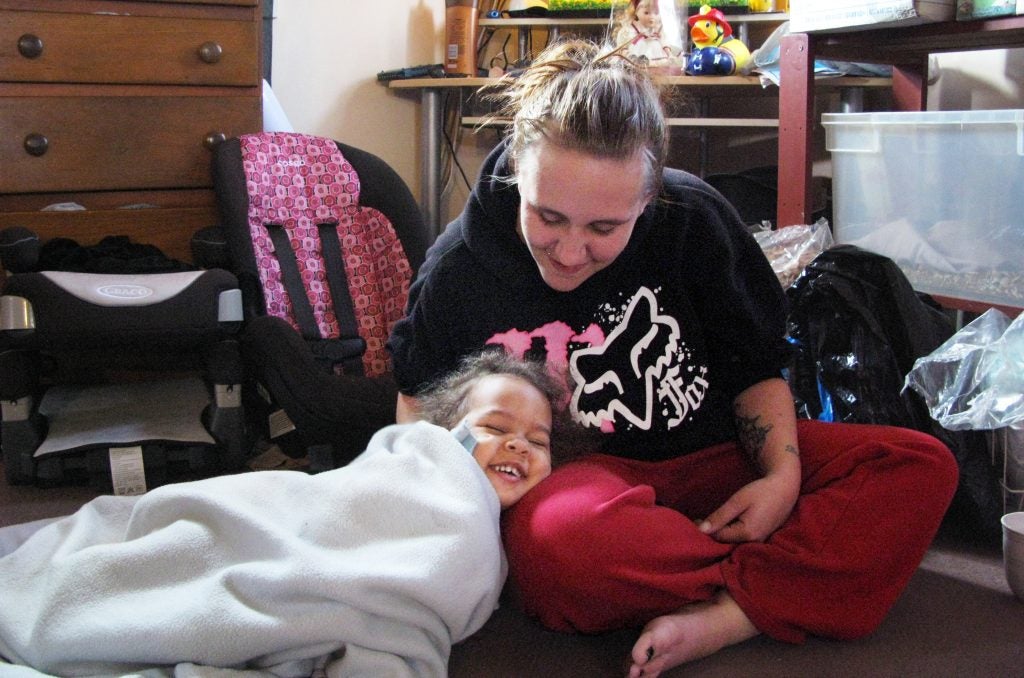
To demonstrate why homelessness and poverty are so inextricably linked, take the example of Desiree Metcalf. Desiree is the single mother of three daughters, ages 2, 4, 6. Each of her daughters has a different father. For Metcalf, being in foster care led to many of her financial and housing issues. NPR writes that, “Nearly half [of women in foster care] become pregnant by the time they’re 19.” The article continues that Metcalf carried this poverty into adulthood – with food, financial, and childcare costs, paying for necessary housing is incredibly difficult for citizens like Metcalf. Impoverished people are far more vulnerable to basic issues, like transportation. Her car was totaled by someone backing out of their driveaway. In the blink of an eye, Desiree now has no means of transportation. This worsens her poverty by severely limiting her ability to get to any type of job.
By now, it’s clear how poverty complicates every single aspect of one’s life, making housing a near impossibility for many. For Americans, the nail-in-the-coffin is known as “poverty traps.” The situation is simple – once someone makes a certain amount of money, they get cut from government support. Instantly, they fall back into poverty. This creates a never-ending cycle of escaping and returning below the poverty line in America. To escape poverty, one can’t slowly work out of it. It requires a significant amount of money. For Desiree Metcalf, NPR writes, “She knows if she starts making money, other benefits — like food stamps — will be cut or eliminated. Just recently, [her] family’s food stamp benefit dropped from $700 a month to $200.”
Poverty traps are a widespread, fundamental problem for homelessness across America. According to UC Davis, “[36%] of individuals return to poverty within four years of ending a spell.” For struggling Americans, they are not just poor. They are persistently poor. Stanford provides some startling statistics: “[In America], 7 million people live in persistently poor rural counties; another 5.5 million people live in persistently poor suburban neighborhoods; and the largest share, yet another 14.2 million people, live in persistently poor urban neighborhoods.”
Our governmental institutions have a moral responsibility to not only support impoverished individuals, but make the process of escaping poverty sustainable. The current reality is that as soon as someone passes the threshold, support simply vanishes. This is inhumane, and a clear reason why America experiences homelessness at such high rates.
Part 3: Support systems
Housing supply is dwindling. Poverty traps make financial security nearly impossible for many. What is our government doing right now, and why are we failing over half-a-million people in America?
A clear vulnerability for our current welfare system is its dependence on local communities’ ability to deliver the resources effectively. Stanford argues that “High-poverty communities […] lack the local public funds, private philanthropy, and nonprofit capacity to develop adequate programming in many service areas.” Welfare is disproportionately less effective where it’s needed most. According to Stanford’s in-depth study, as needs in impoverished counties increase, the provision of services actually decreases. Furthermore, major social assistance programs such as Medicaid are not proportionately mapped to places in need. From a geographical standpoint, access to resources for Americans who need assistance is difficult. As it relates to homelessness, this means access to resources critical to find housing is hardest for those that need it most.
Finally, the structure of governmental support systems are the cause of poverty traps. Programs like Earned Income Tax Credit (EITC) and Supplemental Nutritional Assistance Program (SNAP) have a key problem known as “benefit cliffs.” For someone that relies on these programs, additional income is completely nullified by the subsequent decrease in benefits from the programs. Our welfare programs trap people in income brackets, making it incredibly difficult to build enough financial security to afford housing.
On the bright side, there are cases where programs truly support the housing crisis. According to the Center on Budget and Policy Priorities, “the Emergency Housing Voucher program — still in early stages of implementation — has issued more than 22,000 vouchers to households experiencing or at risk of homelessness and more than 9,000 units have already been leased.”
Moving forward, our support systems for housing must be focused on structure. They should be available for the places that need it most, and should focus on providing support as people exit poverty, rather than simply cutting benefits. This puts a responsibility on our local communities – increasing awareness about poverty traps and making sure resources are actually delivered is critical to support homelessness from the bottom up.
Conclusion
America’s homeless population is the dark underbelly of a country flush with wealth. The causes are mutil-faceted and interdependent. On the economic front, the impacts of the pandemic and recession have left us with labor shortages, increased prices, and a housing crisi. For many hard working Americans, they simply can’t find a place to live. On the solution front, our support systems are failing those who struggle with financial insecurity. Escaping poverty is incredibly difficult. With financial security follows increased crime, mental health issues, and more substance addiction. America’s homeless problem suffers from a downward spiral, making the community’s most vulnerable worse and worse. Homelessness tears these communities apart, creating divisiveness and bitterness toward others. As individuals on the ground, a focus on breaking stigma about homelessness is critical. This crisis is not an inevitability, but a problem that should have a solution. Community’s need to share this idea not only with each other, but the policymakers and governmental agencies that have the power to make a change. For example, street newspapers focus on providing support while also spreading positive messages. However, this is only a start. A solution isn’t easy, because it requires effort from the top-down and the bottom-up. At the end of the day, Americans must care about this issue because it is our very neighbors who are suffering. Half a million people don’t have a place to sleep. Mat Pergens can’t find a house because there are none. Desiree Metcalf can’t escape poverty because of our welfare structure. These problems need solutions, and nothing changes if nothing changes.
Works Cited
Allard, Scott. “Stanford Center on Poverty and Inequality.” Poverty Traps, Stanford University, https://inequality.stanford.edu/sites/default/files/Pathways_Winter2019_Poverty-Traps.pdf.
Berliner, Uri. “The Housing Shortage Is Significant. It’s Acute for Small, Entry-Level Homes.” NPR, NPR, 4 Sept. 2021, https://www.npr.org/2021/09/04/1033585422/the-housing-shortage-is-significant-its-acute-for-small-entry-level-homes.
Fessler, Pam. “One Family’s Story Shows How the Cycle of Poverty Is Hard to Break.” NPR, NPR, 7 May 2014, https://www.npr.org/2014/05/07/309734339/one-familys-story-shows-how-the-cycle-of-poverty-is-hard-to-break.
Ford, Alyssa. “Wages Skyrocket for Us Construction Workers.” Family Handyman, Family Handyman, 28 Nov. 2022, https://www.familyhandyman.com/article/wages-skyrocket-for-us-construction-workers/.
“How Many Americans Live in Poverty?” USAFacts, USAFacts, 27 Jan. 2022, https://usafacts.org/articles/american-poverty-in-three-charts/.
Khater, Sam. “Housing Supply: A Growing Deficit.” Freddie Mac, https://www.freddiemac.com/research/insight/20210507-housing-supply.
Olivia, Ann. “Ending Homelessness: Addressing Local Challenges in Housing the Most Vulnerable.” Center on Budget and Policy Priorities, 2 Feb. 2022, https://www.cbpp.org/research/housing/ending-homelessness-addressing-local-challenges-in-housing-the-most-vulnerable.
Stevens, Ann Huff. “Transitions into & out of Poverty in the United States.” Center for Poverty and Inequality Research, UC Davis, https://poverty.ucdavis.edu/policy-brief/transitions-out-poverty-united-states.