… Through the Power of Street Papers
Real Change, Street Sense Media, and Street Roots are all street papers that serve the purpose of focusing on the plight of the homeless population and poverty-stricken people. With any media source, the goal is to attract a customer base through its presentation. In this media age, it seems printed news is a thing of the past. As a response, each street paper has an online presence with a website and posts on various social media platforms. Each paper still circulates to allow those without internet access the ability to enjoy articles. Those who buy the print version have exclusive access to the news before it is posted online after its circulation period.

Location: Seattle, Washington
Mission: “Real Change exists to provide opportunity and a voice to low-income and homeless people while taking action for economic, social and racial justice.1“
Focus:2
- Social Housing
- Housing First
- Stop The Sweeps!
- Defunding SPD and Investing in Community
- RV safelots and wraparound services for vehicle residents
- Ending Evictions and Protecting Renters
- Drug User Health
- Harm Reduction
- Rapid Expansion of Tiny House Villages, Hotel and Low Barrier 24/7 Shelter
- Hygiene Services for All
Real Change Cover VOL. 29. NO. 413
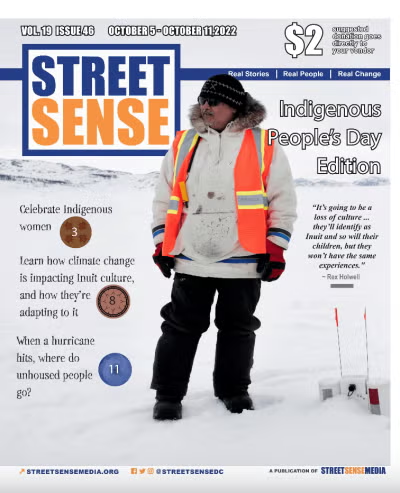
Location: Washington, D.C
Mission: “Our mission is to end homelessness in the Washington, D.C. area by empowering people in need with the skills, tools, and confidence to succeed. Together we use a range of media platforms to raise awareness and spotlight solutions to homelessness in our community.4“
Focus: “Street Sense Media produces journalism, film, theater, photography, audio, illustration, and more, all for the purpose of providing economic opportunity for and elevating the voices of people experiencing homelessness. The content of our media center aims to challenge perceptions of homelessness and those it affects while creating common ground upon which we can build a stronger community.5“
Street Sense Cover VOL. 19. ISSUE 466

Location: Portland, Oregon
Mission: “Street Roots creates income opportunities for people experiencing homelessness and poverty by producing a newspaper and other media that are catalysts for individual and social change.7“
Focus:8
- Lift wages & get more income to the poor
- Make quality housing available & affordable to all
- Improve public health
- Reimagine public safety
- Increase civic engagement of the poor
- Address structures that drive uneven distribution of wealth
- Support the leadership & autonomy of unhoused people
- Defend access to public space over privatization of resources
- Address the relationship between climate change and homelessness
- Oppose criminalization of homelessness – sweeps, sit-lie orders, etc
Street Roots Cover October 12, 20229
Economic Independence: The Vendor Program
Each street paper has a vendor program in place to help both the homeless population and impoverished individuals. Each paper emphasizes the fact that they provide an income to vendors without some of the barriers that occur when looking for a “typical” job. Vendors for each paper do not need an ID, references, or to even fill out an application. All that is required is a short orientation and agreement to each paper’s set of guidelines. Vendors are self-employed without a boss to dictate their hours. You will see an individual vendor wearing a badge provided by each paper; ultimately they will be seen as legitimate salespeople. There is a sense of community as a vendor and within that community there is someone to report grievances to in regard to other vendors or the general public. To protect vendors’ rights each website informs the public of their vendors’ first amendment right to sell the paper on public property. An online payment system is available through each paper for those who do not carry cash. Both Real Change and Street Roots use Venmo while Street Sense Media has its own app for mobile payments.10,11,12
Support Within The Vendor Program
There are differences in the profit and support each paper gives their vendors in reference to the vendor program. Real Change vendors make a profit of $1.40 to $1.50 per paper (purchase price: $0.60 or $0.50 on Tuesdays, selling price: $2)13. Street Sense Media vendors similarly make a profit of $1.50 per paper (purchase price: $0.50, selling price: $2)14. Street Roots vendors only make a profit of $0.75 per paper offset by a lower purchasing price (purchase price: $0.25, selling price: $1)15. Real Change16 and Street Roots17 both offer a leg up with 10 free papers after completion of orientation.
Real Change puts extra effort into helping vendors sell more papers. Each vendor has a chance to earn $25 if they win Vendor of the Week and a profile in the paper which potentially brings more business to the vendor. Each vendor receives support in finding a selling location or choosing an available post that is at least one block away and across the street from the next nearest vendor. There is support available for building a regular customer base18. Once vendors establish a customer base Real Change offers a reserved selling location program. According to this program, vendors that sell 300 or more papers in a month can reserve their spot from 6 am – 2 pm or 2 pm – 10 pm. Vendors who sell 600 or more papers a month apply to have their spot reserved 24/719. Vendors’ locations, names, and badge numbers are posted on the Real Change website so that their customers can always find them20. There is even a Facebook page just for vendors to get updates21.
Street Roots also provides vendor support but it is not as personalized. Their website provides common locations where vendors can be found but they do not list individual vendors’ locations. Street Roots also allows customers to order a bulk subscription for at least $25/week from a vendor. Also, they encourage the public to inform them if they have a location where they’ll welcome a vendor to sell at22.
How Are Vendors’ Voices Heard
Each paper has a page that sheds light on the plight of many vendors. The stories are authored by someone other than the vendor so that those who don’t want to test their journalistic abilities can still have their story told. Real Change, Street Sense Media, and Street Roots each allow vendors to write their personal stories and perspectives if they wish23,24,25.
How Do We End Homelessness?
In general, each paper informs the homeless population of resources available outside of their own resources. Each paper provides an online resource list of shelters, meals, medical and employment assistance, etc. but Real Change and Street Roots provide an extensive printed resource list keeping in mind those without access to the internet26,27,28.
Real Change believes that the best solutions comes from those experiencing the problem and makes it their priority not to assume what is best for their vendors. The Vendor Organizing Community allows vendors to use their expertise to inform Real Change which policies are most beneficial and helps vendors advocate at the city, county, and state level for these policies. To prepare VOC members they take speaking training and prepare written testimonies to share in city and county meetings29. Vendors inform Real Change’s decision-making in which they participate in the editorial committee and develop vendor-centric programs and procedures. Individual vendors have access to “case management, food assistance, service referrals, medical care, mailboxes, and a computer lab” to help them escape homelessness30.
In addition to helping on the individual level, Real Change wants permanent, systematic change. Real Change regularly interviews government candidates and has many articles about the policies affecting the homeless and impoverished community of Seattle31 so readers can make informed political decisions. They are active civic members and have confidence in their use of civil power. Real Change advocates against the criminalization of the homeless which include the ongoing camp sweeps. House Our Neighbors! is their initiative for social housing on the 2022 City of Seattle ballot32. Their efforts for social housing include permanently affordable, comfortable, healthy homes that have “ low energy costs, are resilient to cold snaps and heat domes, and are free from the buildup of condensation and mold33” and provides “ventilated air that offers a respite from air pollution, and wildfire smoke during the extensive smoke events induced by a warming world34.” Their website is full of information to inform readers about social housing and its benefits. Another example of Real Change’s civic involvement is their push to install “street sinks” to provide hygiene facilities to the homeless population in The City of Seattle which has no public restrooms/facilities. The city initially guaranteed to fund the project but has since created barriers to the actual construction of the sinks35. Real Change is present at town hall meetings with the mayor and rallies including a “Tax the Rich” rally36.

Street Sense Media takes a much more individualistic approach to bringing about change and encourages individual development. Their programs are not as concerned with vendors and case management clients being civic members of the community. Vendors participate in the paper though various media platforms including film, illustration, photography, podcasts, theater, and journalism. Vendors have access to numerous workshops exclusive to vendors and case management clients where they develop their artistic skills. An art workshop is available to develop material for the art section of the paper38. An illustration workshop allows vendors to “illustrate content for the newspaper, advertise other programs of our media center and take on contract work as available39.” There is a weekly writing workshop where vendors develop ideas and produce material for the next Street Sense. Vendors develop news material in addition to expressing themselves through poetry, essays, fiction, etc40. A bi-weekly photography workshop “trains participants in the technical operation of a camera, how to choose a composition and how to develop strong concepts41.” Using these skills they produce material for the paper and document the work of the paper’s media center42. The podcast series is contributed to by participants in the podcasting workshop43. The Staging Hope workshop is where vendors create and perform scenes, monologues, poetry, and songs44. Devising Hope is a weekly workshop where vendors partner with high school students to discuss their life stories, examine literary themes, and engage in theatrical exercises and improvisations. The group then develops scenes and monologues to perform for the public45.
Street Sense Media’s individualistic approach is further shown in their case management in which it is built “around close relationships that allow us to tailor the support we provide each person to their particular needs and capacities.46” They believe this approach is possible due to “a person’s long-term involvement as a vendor and/or participant in our workshops.47” Regardless, anyone experiencing homeless receives support which includes direct services such as “offering a person dry clothes or an emergency gift card to purchase food or medicine, working with individuals to secure a new identification card, or as involved as years-long efforts to secure housing.48” Unlike the other street papers, staff goes to the homeless population in which staff makes on-site visits to “offer seasonal toiletry supplies, an invitation to become a vendor, and an offer of assistance through … case management work.49”
They rely on the reader to become informed so that they can be inspired to bring systematic change. Street Sense Media works to inform the public about an extensive list of topics to inspire people to make a change. Their news web page has 82 tabs along the side directing you to 82 topics affecting the community50. Street Sense Media’s civic engagement lies in support of other organizations who fight for systematic change.
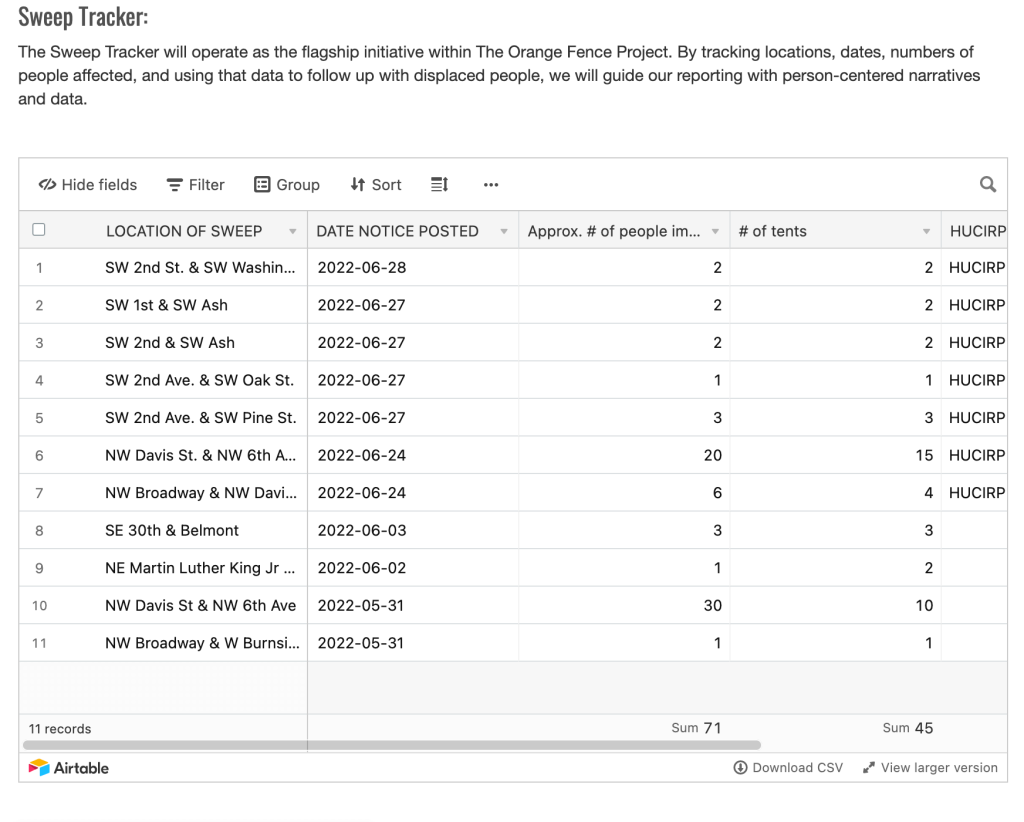
Street Roots seems to be the middle ground between Real Change and Street Sense Media. They provide a balance between civic engagement and the individualistic approach. Civic engagement includes challenging sit-lie ordinances, advocating against the criminalization of homelessness that creates further barriers to housing and employment, and fighting to put an end to camp sweeps52. One way they hope to bring about systemic change is the Portland Street Response plan in which they report on why police sweeps and arresting the homeless population are ineffective and a better system is available for helping those on the streets53. They work to inform the public of political candidates and policies54.
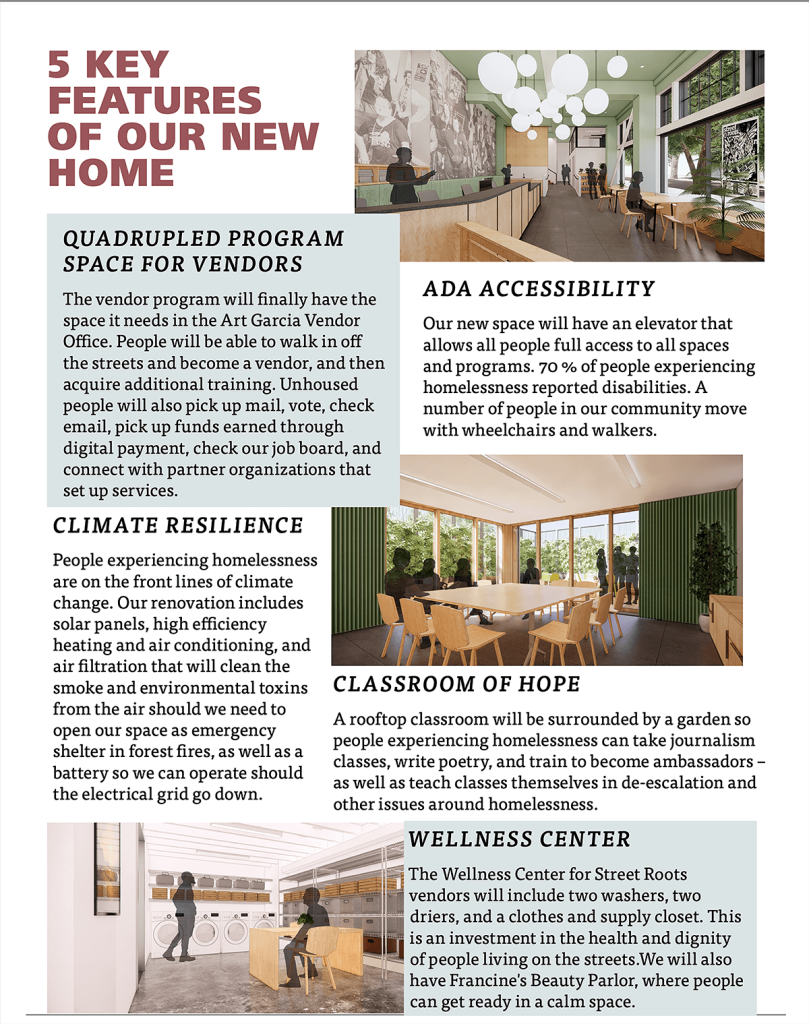
To help individuals their Ambassador Program vendors have additional chances to earn an income including public health outreach, surveys, and trainings. Additionally, ambassadors are connected to jobs with Street Roots’s community partners55. One of their most important aspects will be the building when is it finished. Many individuals will be able to improve themselves through this facility including having a place to shower and do laundry56.
Their main approach is reporting what is happening to individuals to the public and creating or collaborating with others to develop different approaches to addressing homelessness.
- “Street Roots partners with Multnomah County and the Medical Examiner’s Office to create an annual reports on the deaths of people on the streets.58”
- Street Roots’ “The Next Generation” series is dedicated to reporting the obstacles faced by homeless youth59.
On their website, they explain their approach in which they bring “systemic change by drawing from the expertise of vendors who experience homelessness and poverty, and the investigations of the editorial department.60”:
- Helping to launch the C3PO camp villages to provide immediate shelter61.
- Partnering with Oregon Housing Alliance “to advocate for statewide legislation.62”
- Campaigned for the “Metro tax that supports services and rent assistance for unhoused people starting in 2021.63”
- The Orange Fence Project aims to inform the public about homelessness through “personal experiences, testimony, data and improving accountability for public officials64”
Interaction With the Community
Each paper provides a direct link between the homeless population and the overall community. The community can donate, intern, and volunteer65,66,67. Each paper ensures to make the community comfortable when engaging with vendors in which they only sell papers on public property unless they have permission otherwise, vendors are not allowed to harass potential customers, and there are systems in place to report grievances68,69,70. Outside of
Street Sense Media allows the Opinion Section of the paper to be open to anyone who wants to speak about local homelessness and poverty71. They provide the opportunity for the community to listen to presentations from and about the homeless population. There is a cost associated with these student seminars to compensate speakers who are not full-time staff72. Not to mention, Street Sense takes accessibility to the next level with various ways to engage with the material such as films, illustrations, photography, theater, podcasts, seminars, and writing groups.
Street Sense Media is especially essential in its community as it is the “only newspaper focused on homelessness and poverty issues in Washington, D.C. And we are the only newspaper produced by and for people who are homeless and impoverished in our nation’s capital.73” Street Sense Media encourages the community to advocate for the homeless population. They provide hotlines to call if you see someone in need and informs the public of other organizations to volunteer at. Information is provided about various campaigns that help the homeless. There is a section labeled “educate” to provide ways to be part of the solution in which they point you to various organizations and programs that are dedicated to bringing an end to homelessness and other injustices74. Readers are encouraged to “stay informed about policy initiatives that might need your support, and write to your local officials.75” The community is also encouraged to be understanding about why someone is considered “lazy,” “uneducated,” etc, and to use sympathetic language such as “people experiencing homelessness” instead of “bum.” Then, readers should pass on this knowledge to others to build a community dedicated to bringing about change76. Street Sense Media is big on how the homeless population is represented and understood in the community. Their Homeless Crisis Reporting Project aims to push newsrooms to dedicate a week to reporting on homelessness and provides a guide for journalists who want to report on homelessness77.
Statistical Impact
| Real Change | Street Sense Media | Street Roots |
| 600 vendors annually78 Homeless population in Seattle, Washington: 11,751 in 202079 | 130 vendors in 201780 Homeless population in Washington D.C.: 6,521 in 201981 | 800 vendors annually82 Homeless population in Portland, Oregon: 6,633 in 202283 |
Final Thoughts
Street Sense Media’s approach is you can do better once you know better. Real Change’s approach is if you know better push the government to do better. Street Roots’s approach is hold yourself and the government accountable. The number of homeless people in each district is numerous and each paper’s vendor program only helps so many people. Therefore success can not be measured on the individual level but the paper’s approach systematic change. No matter how many programs or initiatives each paper advocates their success depends on the readers of the paper who use their civic voice.
Works Cited
https://docs.google.com/document/d/1UYsN4YB-vds1uERs1T7YcQwUg2CifaYpmPSDd00c9_0/edit