
Complete 1, 2 and 3
1. My Food Footprint
A. Calculate your body’s Basic Metabolic Rate (BMR), using:
BMR(man) = 10 * weight(kg) + 6.25 * height(cm) – 5 * age(y) + 5
BMR(woman) = 10 * weight(kg) + 6.25 * height(cm) – 5 * age(y) – 161
Adjust BMR by lifestyle:
Sedentary lifestyle – very little or no exercise at all: BMR x 1.2.
Slightly active lifestyle – light exercise between once and three times per week: BMR x 1.35
Moderately active lifestyle – moderate exercise three to five days per week: BMR x 1.5.
Active lifestyle – intensive/heavy exercise six to seven times per week: BMR x 1.7.
Very active lifestyle – very intensive exercise twice per day: BMR x 1.9.
Total calories/day needed to maintain current body (TCN):
B. Use a calorie tracker to determine your daily calorie intake (total calories consumed, TCC). I use MyFitnessPall, which is online at https://www.myfitnesspal.com/, which also has a handy cell app that allows scanning of UPC or QR codes (iPhone and Android). Log everything, including small items like a cookie, beverage, butter/cooking oil, dressing, etc.
Determine your daily difference with total calories needed:
| Day of the Week | TCN-TCC |
2. My Water Footprint
Calculate your personal water footprint using the extended calculator at:
http://waterfootprint.org/en/resources/interactive-tools/personal-water-footprint-calculator/personal-calculator-extended/
Your individual water footprint is equal to the water required to produce goods and services you consumed. The calculations are based on the water requirements per unit of product as in your country of residence (use USA).
Your Water Footprint is (m3/y):
3. Food Security
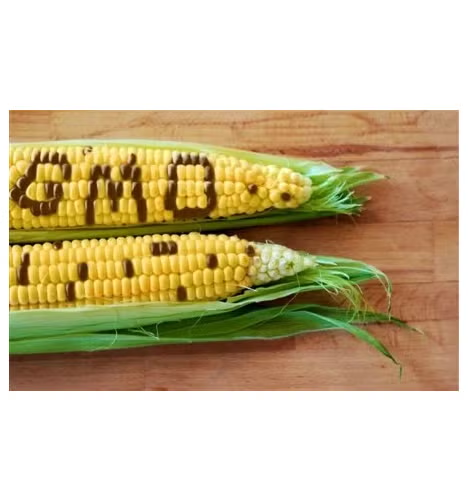
Beginning in the 1980’s, the GMO revolution has promised to change commercial food production. Proponents argue that GMO crops will be necessary if we hope to increase food production and feed a planet of 9+ billion. Opponents argue there may be severe consequences that come along with the gains from this GMO revolution.
Before Class read “Genetically modified and organic crops in developing countries: A review of options for food security” by Azadi and Ho (2010). Next, watch the interview of Mark Lynas, an anti-GMO activist turned supporter. Then answer the following questions which we will use in section for discussion:
- Genetically modified foods are generally safe and should be subject to the same regulations as other foods
- Genetically modified foods are not generally safe and should not permitted
- Have you consumed genetically modified food in the last week?
In Class:
We will watch a chapter of the Food Inc documentary to compare its arguments against those in the pre-section reading and video.
GMO, “Food Inc” Discussion Questions:
- The Food Inc did not paint GMO crops in a positive light. What is the other side of this issue? What are some benefits of GMO crops?
- What are some of the issues surrounding GMO crops? What can be done to address these issues?
- Based on what you have learned, should genetically modified crops be allowed? Why?
Assignment
Write one page on your position on GM foods. Use course material to defend your position. You must properly cite at least 3 pieces of information to support your position. Submit before the next lab.
Optional
You may wish to watch the Future of Food, a 2004 documentary on GMO crops. It is freely available here.