By-talk: Museum Trips and Interview with Dr. Asanka
I have been passionate about museums for a long time, leaving my footprints in many I’ve visited. My travels have taken me to the British Museum, Tokyo National Museum, numerous national museums across China, and also, the UMMA. The allure of museums lies in the way their exhibits attempt to answer two profound questions: Who are we? Where do we come from and where are we headed? These are questions worth generations of exploration.
Recently, I visited the National Maritime Museum in Galle and the Gangaramaya Temple in Colombo. Among the exhibits, the bronze and porcelain artifacts captivated me the most. They tell contrasting stories: bronze speaks of the harsh realities and low productivity of ancient times, while porcelain reflects an era where basic needs were met, allowing for the flourishing of higher-level aesthetics and expressions. Each artifact tells its own tale. I find myself imagining the journey of a brick with embossed words found in a shipwreck: how it was made in the Netherlands, traveled with Dutch colonists to Sri Lanka, sank in a tsunami or storm, and was eventually excavated and stored in a museum. For further insights, please refer to the compilation of these articles here: https://www.notion.so/582be02ad44e4ec49748452929ac0e5c?v=14870e15bb534027a462e5a39054127e&pvs=4.
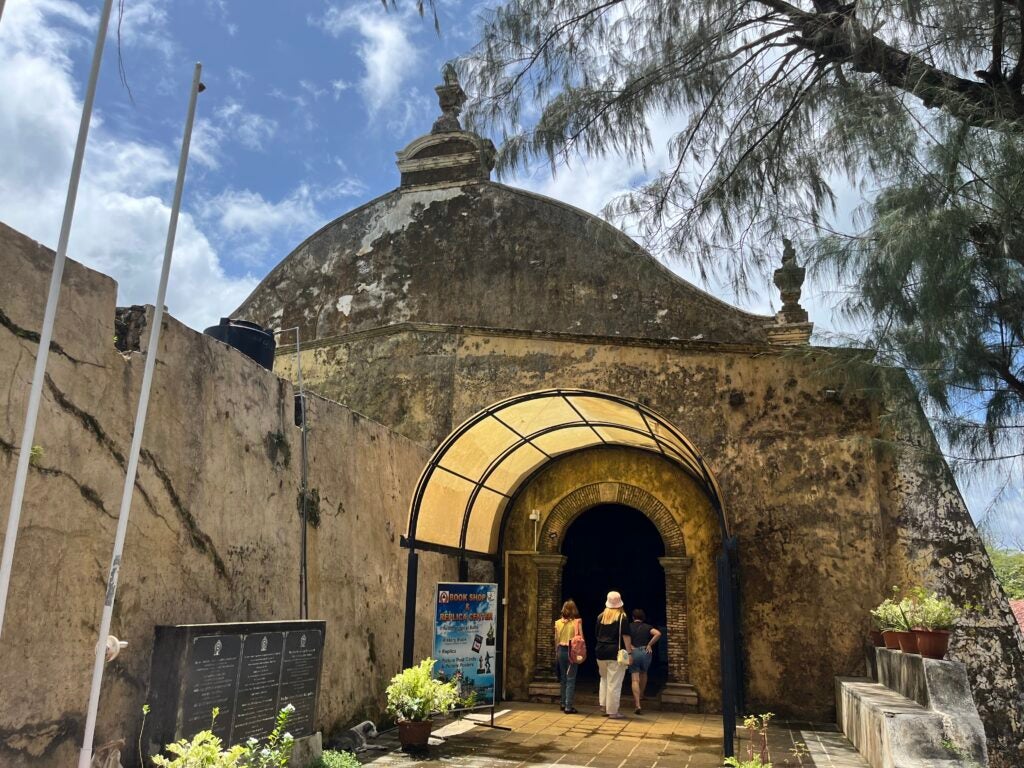
During my internship, I had the privilege of interviewing Dr. Asanka, an expert in international trade and the EU-Sri Lanka GSP+ scheme. His answers were illuminating to me. Here’s the quote:
Me: Could you evaluate the potential advantages and disadvantages of the renewed cooperation through GSP+ for the next renewal period?
Dr. Asanka: One major disadvantage is that Sri Lankan industries, by receiving this preferential access to a major market, lack the incentive to increase their cost competitiveness. They are not competing on an equal basis with other competitive countries, placing us in a privileged but precarious position. If our industries continue to rely on this somewhat uncertain trade scheme, a sudden loss could have a significant economic impact, as seen in 2010 when we lost the GSP+ and both the fishery and government sectors suffered greatly.
This summer, my travels from the States to the China and then to Sri Lanka have allowed me to observe the evolution of the global value chain. Countries that led in capital accumulation have significant influence in shaping world policies. The GSP+ initiative, for example, although beneficial in promoting human rights and sustainability, raises questions about the EU Commission’s ability to fully understand Sri Lanka’s (also, other contracting parties) unique national conditions. Can they make accurate and informed decisions on grant allocations, rather than applying a one-size-fits-all requirement? Policies need to be analyzed with a long-term perspective, as what may seem detrimental initially could prove beneficial in the long run.
History tends to repeat itself, and so do we. The challenge is to learn from it and make a constructive difference.