

My research is currently titled, “Men’s Health and Intimate Partner Violence: Analyzing Interviews About Behavior,” and is led by Dr. Vijay Singh in the U of M Injury Center. This project is a mixed methods one, as Dr. Singh initially used surveys to collect data on men in two outpatient clinics in the Ann Arbor/Ypsilanti area, and then contacted eligible men to be interviewed by phone. Currently, we are coding and analyzing the twenty interview transcripts. In these interviews, men were asked to talk about their current and past relationships, and how issues like violence and conflict appear within their relationships. The men were also asked to describe ideas they had about professional or medical interventions. Our overall goal is to collect men’s viewpoints about intimate partner violence and perhaps in the future, use this data to inform a mindfulness-based intervention.
There are some ethical issues I keep in mind when conducting my research; the most important being subject confidentiality. The interviews themselves are de-personalized and all of the patient information was removed from the interview transcripts before I analyzed them. Still, I make a point not to discuss the contents of the interviews with anyone outside of the research project. I also try to be very precise and thoughtful in my coding of the interviews themselves. As Dr. Ferrez said when presenting her own research, it is a great responsibility to shine a light on these people’s voices. Because of this, I try to let the subjects’ words guide the coding instead of imposing my own viewpoint.
In terms of impact, I think the group most directly effected by this research are men themselves. Men’s viewpoints have not often been analyzed in research regarding intimate partner violence, and this research attempts to bridge that gap. This gap is so prominent that even a seemingly simple conclusion like “Our research shows that men are willing to talk about intimate partner violence,” was enough to seem like a revelation to people I presented to at the Michigan Meetings this year. Specifically, however, our research will probably impact heterosexual men the most because the majority of the men interviewed were in heterosexual relationships. Most of the men interviewed were also African American and had some college education. In terms of those impacted the least, I would say members of the LGBT community, such as gay or trans men, were likely not well-represented in our study (even though I do not believe there was a section about gender identity on the initial surveys). I think women who are involved in relationships with men may also be impacted as this research could lead to an intervention which could impact their potential male partners.
[su_quote]This gap is so prominent that even a seemingly simple conclusion like “Our research shows that men are willing to talk about intimate partner violence,” was enough to seem like a revelation to people I presented to at the Michigan Meetings this year.[/su_quote]
One important ethical/ideological nuance Dr. Singh and I often consider is how this research and its findings fit into the well-established feminist theory regarding intimate partner violence. The classical feminist perspective only engages with (usually female) survivors in an effort to not center oppressors. While this is indeed very important, it also makes it tricky for us to navigate framing men’s perspectives when they are perpetrators. At what point are we excusing or minimizing men’s violent behaviors towards their female partners? How seriously can we take these men’s accounts of conflicts in their relationships when their partners are there to comment? AM I BEING A BAD FEMINIST RESEARCHER??? These are questions I think about every time I code!
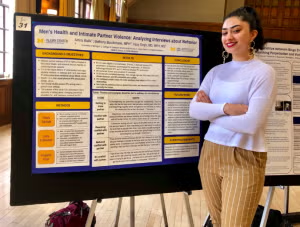
Here’s me presenting my research at this year’s Michigan Meetings conference since the theme was Ending Gender-Based Violence! (fun fact: this was featured on the Michigan Students twitter)