

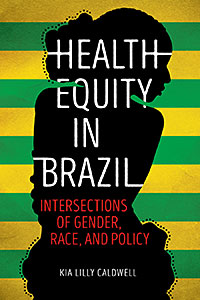
I just finished reading the book Health Equity in Brazil: Intersections of Gender, Race, and Policy by Kia Lilly Caldwell. The book walks readers through a history of women’s health campaigns in Brazil starting from the early 80s until recent years. Despite Brazil being home to the second largest African-descendent population outside of Africa, the country has been reluctant to acknowledge or address the public health issues that primarily affect its Afro-Brazilian population. The book shows how activists in the feminist health movement and black women’s movement were instrumental in the development of policies that prioritized black women’s health as a human rights issue.
The topics covered in this book are relevant to my experiences beyond WAGSFP. I previously worked on a history research project titled “Radical Black Activism for Reproductive Justice,” and I found that the fight for reproductive justice in Brazil echoed some of the issues faced in the fight for reproductive justice in the United States.
SisterSong, a national organization based in the southern United States that advocates for better institutional policies and systems that impact the “reproductive lives of communities of color,” defines reproductive justice as:
“The human right to maintain personal bodily autonomy, have children, not have children, and parent the children we have in safe and sustainable communities.”
By definition, reproductive justice encompasses access to abortion, comprehensive sex education, STI prevention/treatment, freedom from violence, adequate prenatal care, access to proper healthcare, adequate wages, safe housing, and any other issue that would impact a woman’s agency in her decision to have or not to have children.
The everlasting legacy of slavery in both countries continues to have profound consequences for black women’s health and reproductive lives. In both Brazil and the United States, black women’s bodies have been systemically devalued by the state. There are many, many, many books and scholarly articles that unpack these histories, and I encourage you to read more!
I recommend reading Caldwell’s Health Equity in Brazil, and if you’d like to better understand the state of black women’s reproductive rights in the United States, I strongly encourage you to read Dorothy Roberts’s Killing the Black Body.
Thanks for reading!