
By Amitabh Kunchey
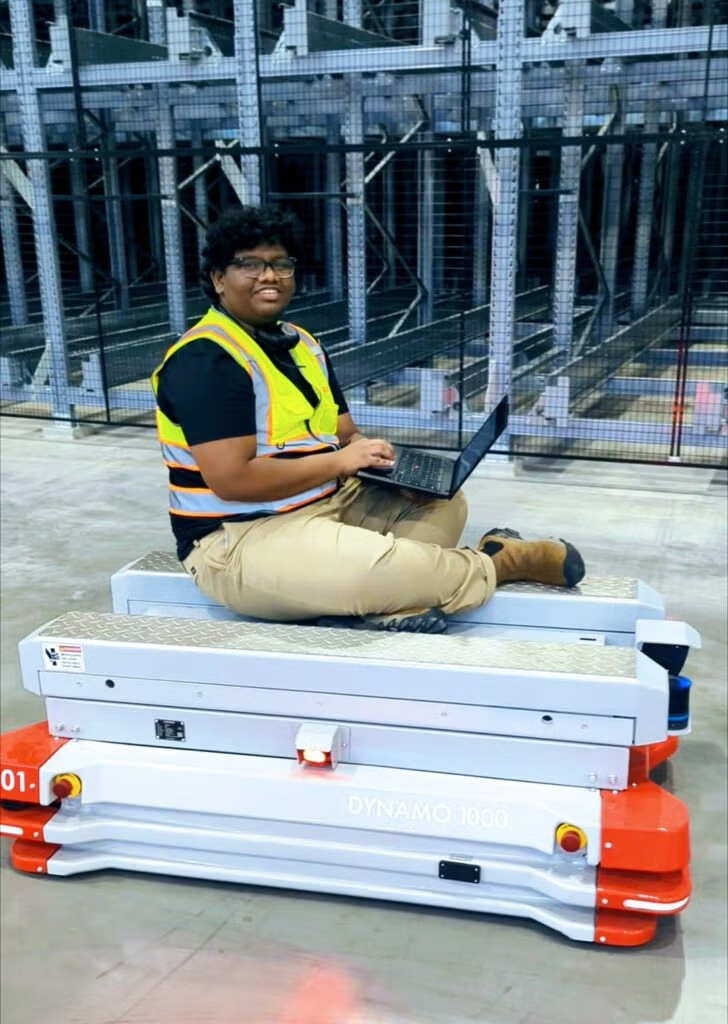
This summer I lived inside a logistics jungle at UPS Louisville, helping commission 120+ Zippys and 38 AMRs.
On paper, it sounds futuristic: fleets of robots zipping packages around a massive hub. In reality, it was
controlled chaos. Robots broke down mid-shift, networks collapsed for no reason, and I spent nights with a
multimeter in one hand and a laptop in the other, trying to keep the system alive.
The Reality Check
I thought I’d be writing neat code and observing how fleets scale. Instead, I was swapping out contactors on
robots that wouldn’t power on, rewriting ROS configs that mysteriously vanished, and debugging Docker pulls
that hung forever at 3 a.m. One morning, half the fleet decided they couldn’t dock anymore—no errors, no
warning, just a collective strike. Another time, a software update meant we spent hours chasing why Zippy 3
wouldn’t talk to the server while Zippy 4 worked fine. What I learned quickly: panicking doesn’t fix robots. You
need patterns, persistence, and a team.
Habits, in Action (Not Theory)
❖ Start Where You Are – My strengths were coding and debugging, and those skills carried me through
the first week. But hardware? Field repairs? Total blind spot. I had to admit “I don’t know” more times
than I’d like and pick things up on the fly.
❖ Always Ask – I turned “why” into my daily weapon. Why did this launch crash? Why is this one robot
undervolting while the others aren’t? The better my questions got, the faster my fixes came.
❖ Build a Team – Japesh, my mentor, and Ridham, my co-intern, were my lifelines. We rotated
roles—sometimes one of us played facilitator, sometimes follower, sometimes problem-solver. Trust
wasn’t optional; it was survival.
❖ Value Difference – I see problems in flowcharts; Ridham feels them through hardware. That mix saved
us. Alone, I’d still be stuck staring at logs; together, we actually fixed things.
❖ Start Small – Some problems were so big they felt impossible. Breaking them into small wins—like
fixing one node before touching the whole fleet—was the only way forward.
❖ Expect Challenges – This wasn’t a guideline, it was the daily script. Plans failed constantly. But every
failure stopped feeling like defeat and started feeling like a puzzle.
❖ Pause and Reflect – I kept a nightly log: what broke, what worked, what I learned. Reflection made me
sharper the next day.
What Stuck With Me
Robotics isn’t just machines. It’s people adapting when the system collapses, asking better questions, and
building trust in high-stakes environments. Technical skills matter, but they’re useless without leadership and
resilience. That was the real surprise of this internship—I grew more as a leader than as a coder.
Next Steps
At Michigan, I’ll keep diving into multi-robot systems and the messy human side of scaling tech. Long
term—whether it’s research, startups, or something I can’t yet name—I know this: when things fail (and they
will), I won’t freeze. I’ll adapt, ask, team up, and keep going.

